

Demystifying Titanium Alloy Hardness: How Does a Core Indicator Determine Its Industrial Applications?
Feb 26, 2026
Leave a message
In the "star team" of industrial materials, titanium alloys, with their multiple advantages such as lightweight, high strength, and corrosion resistance, have become highly sought after in aerospace, marine engineering, and biomedical fields. Hardness, as its core mechanical indicator, directly determines the application scenarios, processing methods, and even the performance limits of titanium alloys.
From precision medical implants to aero-engine blades, every application of titanium alloys relies on precise control of the hardness index. Today, we'll dissect the hardness system of titanium alloys and discuss the materials science behind this crucial indicator.
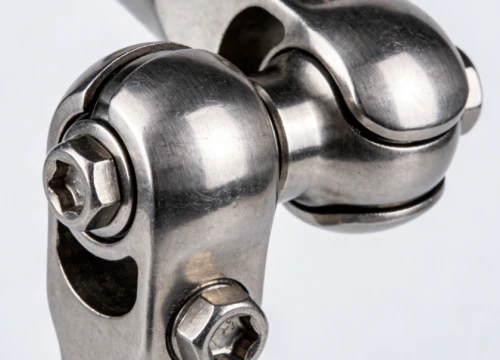
I. How is Titanium Alloy Hardness Measured? Three Standardized Indicators, Each with Its Specialization
Hardness is a material's ability to resist localized plastic deformation. The hardness assessment of titanium alloys is not a single numerical value but rather follows a standardized testing system. Different testing methods correspond to different application scenarios, and the results will vary. Choosing the right indicator is key.
Isostatic Vickers Hardness (HV): The "Gold Standard" for Precision Testing
By creating an indentation on the material surface with an indenter, the hardness value is calculated per unit area. It offers high accuracy and is the preferred method for hardness evaluation of precision-machined parts. Titanium alloys typically have an HV value between 250 and 350. For example, TC4 titanium alloy, commonly used in aerospace, can reach an HV of 350, exhibiting excellent resistance to deformation, making it particularly suitable for testing thin-walled parts and effectively preventing matrix deformation.
Rockwell Hardness (HR): The "Fast Testing Tool" for Production Sites
Using a diamond cone or steel ball indenter, the hardness value is determined by the indentation depth. This method offers extremely high testing efficiency, requiring no complex calculations. Titanium alloys typically have an HR value between 20 and 40, perfectly suited for rapid testing in mass production, significantly improving production efficiency.
Brinell Hardness (HB): A "Specific Characteristic" for Coarse-Grained/Annealed Materials
Hardness is calculated by measuring the indentation diameter after applying a specified load with a steel ball indenter. The HB value for titanium alloys is generally 100-200, making it more suitable for hardness testing of annealed or coarse-grained materials. It accurately reflects the resistance to plastic deformation in these materials.
Simply put, choose HV for precision parts, HR for batch testing, and HB for annealed/coarse-grained parts. Choosing the appropriate value based on the material condition and application requirements yields the most valuable hardness data.
II. Hardness is not an isolated parameter; it has a synergistic effect.
The hardness of titanium alloys is never a standalone value, but rather deeply intertwined with high strength, lightweight, corrosion resistance, and high-temperature resistance, forming a synergistic effect. This is the core reason for its outstanding performance.
1. Hardness + High Specific Strength: Achieving Both Lightweight and Impact Resistance
Titanium alloys have only 60% the density of steel. Through solution strengthening and aging treatment, their specific strength (strength/density) can reach more than twice that of steel. The combination of high hardness and high strength allows titanium alloys to maintain structural stability while significantly reducing weight under impact loads. The use of TC4 titanium alloy in aircraft landing gear exemplifies this advantage.
2. Hardness + Dense Oxide Film: Enhanced Corrosion Resistance
A dense TiO₂ oxide film forms on the surface of titanium alloys, exhibiting corrosion resistance far exceeding that of stainless steel in seawater and chloride ion environments. The increased hardness effectively reduces the propagation of microcracks on the material surface, preventing corrosive media from penetrating the interior and further enhancing corrosion resistance, making it an ideal material for marine engineering equipment.
3. Hardness + High Temperature Resistance: Suitable for High-Temperature Industrial Applications
Ordinary materials soften and deform at high temperatures, while titanium alloys exhibit excellent high-temperature hardness retention. For example, Ti60 titanium alloy maintains a hardness of HV245 even at 600℃, sufficient to meet the requirements of high-temperature core components such as aero-engine blades.
Ordinary materials soften and deform easily at high temperatures, while titanium alloys exhibit excellent high-temperature hardness retention. For example, Ti60 titanium alloy can maintain a hardness of HV245 even at 600℃, which is sufficient to meet the requirements of high-temperature core components such as aero-engine blades.
III. Overview of Common Titanium Alloy Hardnesses: Composition and Processing Determine Performance
Different titanium alloys have different compositions and heat treatment processes, resulting in vastly different hardness characteristics. Furthermore, the processing state significantly affects the hardness value-for example, the hardness of cold-rolled TC4 can be 30% higher than that of annealed TC4, but the plasticity will decrease accordingly. Therefore, in practical applications, an optimal balance between hardness and toughness must be found.
Send Inquiry