Shaanxi Jude Steel Co., Ltd: Your Professional Stainless Steel Manufacturer!


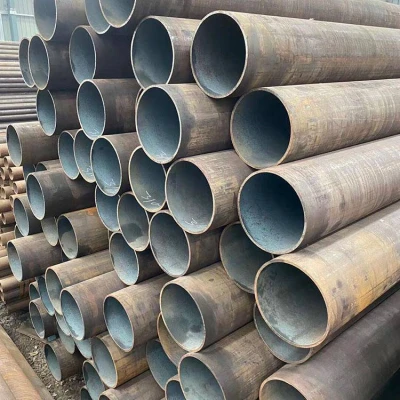
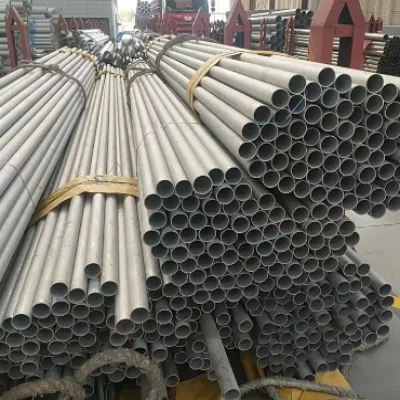
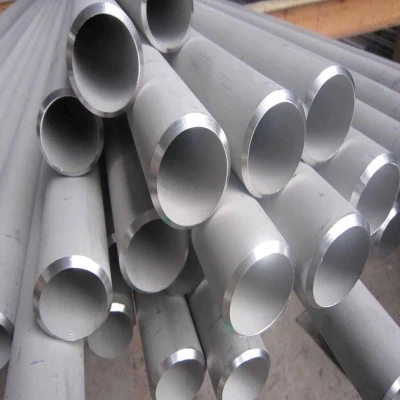
Shaanxi Jude Steel Co., Ltd, established in 2008, is a professional manufacturer and supplier of seamless steel pipes and titanium alloys with an annual sales volume of 50,000 tons in the domestic and international markets. We keep a large inventory of specialty metals and titanium mill products in round bar, sheet & plate, coil, pipe & tube, pipe fittings, flanges, and forgings, offering a wide range of grades and sizes with lead times to meet your manufacturing requirements.


  • 45° Elbow Stainless Steel Pipe Fittings

    Standard:ASTM A403 / ASME B16.9Grades:Available in 304 (UNS S30400) and 316L (UNS S31603)Outside Diameter (OD):Manufactured to match the standard OD of stainless steel pipe per ASME B36.19.Wall

  • 90° Short Radius Elbow Stainless Steel Pipe Fittings

    Standard:ASTM A403 / ASME B16.9Grades:304 (UNS S30400) and 316 (UNS S31600)Outside Diameter (OD):Manufactured to standard stainless steel pipe OD dimensions per ASME B36.19Wall Thickness:Available in

  • 90° Long Radius Elbow Stainless Steel Pipe Fittings

    Standard: ASTM A403 / ASME B16.9Grades: 304 (UNS S30400) And 316L (UNS S31603)Outside Diameter (OD): Match The Standard ODWall Thickness: The Wall Thickness Conforms To ASME B36.19Length:

  • 304L Elbow Stainless Steel Pipe Fittings

    Standard: ASTM A403 / ASME B16.9Grades: 304L (UNS S30403)Outside Diameter (OD): 10mmLength: Each Elbow Is Fabricated With Equal Tangent Lengths On Both Ends, Providing Sufficient Straight Section For

  • 304 Forged Socket Welding Tee Stainless Steel Pipe Fittings

    Product Details Products Description 304 Stainless Steel Forged Socket Welding Tee & Elbow Corrosion-Resistant Pipe Fittings for High-Integrity Piping Systems Standard: ASTM A182 / ASME B16.11

  • SS304 316L Stainless Steel Tee Pipe Fittings

    Standard: ASTM A403 / ASME B16.9Grades: 304 (UNS S30400) And 316L (UNS S31603)Outside Diameter (OD): 114.3mmLength: Center-To-End Dimensions Conform To ASME B16.9 Dimensional Tables For Standard

  • Mirror Polished Stainless Steel Pipe Fittings

    Standard:ASTM A403 / ASME B16.9Grades:304 (UNS S30400) And 316L (UNS S31603)Outside Diameter (OD):Manufactured To Standard Stainless Steel Pipe OD Dimensions Per ASME B36.19Wall Thickness:Available

  • Hygienic Stainless Steel Pipe Fittings

    Standard: DIN 11850, 3A, SMS, ISO hygienic food & pharmaceutical standardsGrades: 304 hygienic stainless steelOutside Diameter (OD): Sanitary standard tube OD, custom sanitary sizes availableWall

  • Flanges Stainless Steel Pipe Fittings

    Standard: ASME B16.5, GB/T, EN, DIN industrial flange standardsGrades: Single grade 304 austenitic stainless steelOutside Diameter (OD): Complete matching pipe outer diameter, all standard calibers

  • Threaded Stainless Steel Pipe Fittings

    Standard: ASME B1.20.1, NPT, BSPP, BSPT, ASTM A182, GB, ENGrades: 201, 304, 304L, 316, 316L stainless steelOutside Diameter (OD): 1/8”–4” common thread sizes, custom bore availableWall Thickness:

  • Butt-Weld Fittings Stainless Steel Pipe Fittings

    Standard: ASME B16.9, ASTM A403, MSS SP-43, GB, ENGrades: 304, 304L, 316, 316L, 321, 347H, 2205, 2507, 904LOutside Diameter (OD): DN15–DN1200 full industrial caliber, custom sizesWall Thickness:

  • Straight-Line Hairline Brushed Stainless Steel Sheet

    Straight-Line Hairline Brushed Stainless Steel Sheet For Appliances | Architectural Panels | Elevator Decoration

First 1234567 Last
 
Why choose us?

Excellent Product Quality

We have established a complete quality inspection system to conduct comprehensive inspections on each batch of stainless steel pipes, including chemical composition analysis, mechanical properties testing, dimensional measurement, surface quality inspection, etc. Only products that have passed strict inspections can be shipped out of the factory to ensure that every stainless steel pipe received by customers meets high-quality standards.

Customized Services

In addition to standard specifications of products, we also provide customized services. According to the drawings or specific requirements provided by customers, we are able to produce stainless steel pipes that meet the personalized needs of customers and provide customers with a one-stop solution.


Advanced Equipment

The company has a large-scale production base and advanced production equipment, which can achieve large-scale production. Large-scale production can not only reduce the production cost of unit products, but also improve production efficiency and shorten the delivery cycle. This enables us to provide customers with high-quality stainless steel pipe products at a more favorable price.

High-quality Customer Service

We have a professional sales team with rich industry knowledge and sales experience, who can provide customers with professional product consultation and technical support. Whether in product selection, usage, or after-sales service, the sales team can answer customers' questions in a timely and accurate manner and provide effective solutions.


Benefits of Stainless Steel
 

Corrosion resistance

All stainless steels exhibit high resistance to corrosion, making them suitable for a wide range of environments. Low alloyed grades resist corrosion in atmospheric conditions; highly alloyed grades can resist corrosion in most acids, alkaline solutions, and chloride-bearing environments, even at elevated temperatures and pressures.

EN 10216-2 P265GH Seamless Steel Pipe
UNS S32615 Seamless Pipe

High and low-temperature resistance

Some grades will resist scaling and maintain high strength at very high temperatures, while others demonstrate exceptional toughness at cryogenic conditions.

Ease of fabrication

Stainless steel is highly versatile and can be easily cut, welded, formed, machined, and fabricated, allowing for efficient manufacturing processes.

316ti Stainless Steel
UNS S44600 Seamless Steel Pipe

Strength

The cold work hardening properties of many stainless steels can enable design optimisation by reducing material thickness, weight, and associated costs. Other stainless steels may be heat treated to produce very high-strength components.

Aesthetic appeal

Stainless steel is available in many surface finishes. It is easily and simply maintained resulting in a high quality, pleasing appearance.

EN 10216-2 Hot-Finished Seamless Steel Tubes
EN 10216-5 Seamless Tube

Hygienic properties

Stainless steel's cleanability makes it the first choice in environments where hygiene is critical, such as hospitals, kitchens, and food and pharmaceutical processing facilities.


Product Parameters

Property

Value

Tensile Strength (MPa)

485 - 680

Yield Strength (0.2% Offset, MPa)

≥ 170

Elongation (% in 50mm)

≥ 40

Hardness (Rockwell B)

≤ 92

Density (g/cm³)

7.93

Melting Point (°C)

1400 - 1450


Application of Stainless Steel
 

Food and catering
Stainless steel is commonly seen as kitchen accessories, cutlery, and cookware. From knife blades with sharp edges to molded shapes like cookers, grills, sinks, and saucepans- the presence of stainless steel is essential. It’s also used as a finish for refrigerators, countertops, and dishwashers.


Offshore technology
In offshore technology, stainless steel is mainly used in the pipework. They are used to transport hydrocarbons, petrochemicals, etc. for seawater systems. They are often the best choice for offshore systems given their resistance to the corrosive effects of seawater.


Seawater desalination plants
Stainless steel’s great mechanical properties make it an essential material for seawater reverse osmosis units (SWRO).


Chemical industry
Chemical plants expose metals and equipment to an extremely harsh environment. Stainless steel offers the best solution to withstand corrosion elements.


Bridges
Duplex stainless steels, a recent family of stainless steel alloys, are becoming increasingly popular in bridges and other engineering structures as these steels are typically twice as strong as ferritic alloys. Because of their increased strength, less material is needed, thus becoming more cost and weight-efficient.


Storage tanks
Stainless steel tanks are regularly used to hold corrosive substances such as chemicals, gases, and many other bulk materials, including food and water. It doesn’t add any flavor or smell to foods and water, which is another advantage.


Payment, Packaging and Shipping

Payment Terms

• 30% TT deposit + 70% balance before shipment
• L/C at sight

Packing

Standard: Wooden pallet
Custom packaging available

productcate-716-385


FAQ


Q: How does stainless steel resist corrosion?

A: Stainless steel's corrosion resistance comes from its passive layer, a micro-thin, chromium-rich oxide film that forms spontaneously when the metal is exposed to oxygen. This invisible film acts as a barrier, protecting the underlying iron from oxidizing. If the passive layer is damaged, it can naturally self-repair, provided there is enough oxygen present in the environment.

Q: What are the main families of stainless steel?

A: Stainless steel is broadly categorized into five main families based on their crystalline structure: austenitic, ferritic, martensitic, duplex, and precipitation-hardening. Austenitic types, such as the common 304 and 316 grades, are known for excellent corrosion resistance and ductility. Ferritic steels are magnetic and offer good corrosion resistance at a lower cost, while martensitic steels are prized for their hardness. Duplex and precipitation-hardening steels combine properties for higher strength and corrosion resistance.

Q: What is the difference between 304 and 316 stainless steel?

A: The primary difference is the addition of molybdenum in 316 stainless steel, which significantly improves its resistance to corrosion, particularly against chlorides and pitting. This makes 316 the preferred choice for marine environments, coastal areas, and chemical processing. In contrast, 304 stainless steel is a general-purpose, economical grade suitable for a wide range of applications, including most kitchen equipment.

Q: Why are some types of stainless steel magnetic and others not?

A: Whether stainless steel is magnetic or not depends on its microstructure. Ferritic and martensitic stainless steels have a body-centered cubic crystalline structure that makes them magnetic. Austenitic stainless steels, which are more common and contain higher levels of nickel, are generally non-magnetic in their annealed state. However, they can become slightly magnetic when heavily cold worked.

Q: What does the marking 18/8 or 18/10 on stainless steel mean?

A: The numbers 18/8 and 18/10 refer to the chromium and nickel content, respectively. The first number, 18, indicates that the steel contains approximately 18% chromium. The second number denotes the nickel content, with 18/8 having about 8% nickel and 18/10 having about 10%. The higher nickel content in 18/10 provides slightly better corrosion resistance and a more lustrous finish, often used in high-quality cutlery and cookware.

Q: Is stainless steel recyclable?

A: Yes, stainless steel is 100% recyclable and is one of the most recycled materials in the world. It can be melted down and repurposed indefinitely without losing its quality or properties. Recycling stainless steel is more energy-efficient than producing it from raw materials, which significantly reduces carbon emissions and conserves natural resources.

We're professional stainless steel manufacturers and suppliers in China, specialized in providing high quality customized service. Be free to wholesale bulk stainless steel for sale here and get free sample from our factory. For price consultation, contact us.

Carbon Steel Coil, Stainless Steel Industrial Tube, Thick Wall Seamless Steel Pipe

Send Inquiry