

Analyzing the Diverse Properties of Titanium, Breaking the Limitations of Traditional Metal Understanding
Mar 09, 2026
Leave a message
Jude, deeply rooted in the industry's forefront, focuses on hot topics in the titanium metal field, providing in-depth analysis of titanium's unique properties to showcase the infinite potential of titanium materials to industry professionals and enthusiasts.
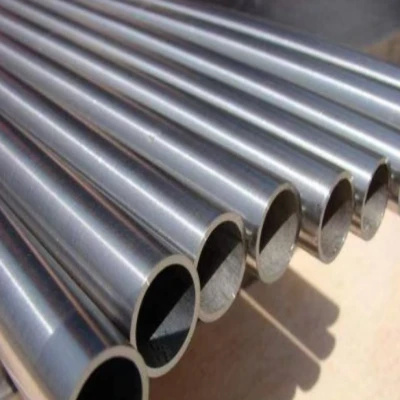
Corrosion Resistance: A Robust Defense Built by an Oxide Film
Titanium's corrosion resistance in seawater or acidic environments is truly remarkable. Even after being buried underground for decades, titanium remains as bright as new. In humid environments such as the ocean and swimming pools, its stability far surpasses that of stainless steel, and it has even been used to store nuclear waste containers. Behind this phenomenon lies the crucial role played by the dense and stable TiO₂ oxide film on the titanium surface.
When titanium is exposed to air, it rapidly reacts with oxygen to form an oxide film. This oxide film acts like a "protective suit," isolating titanium from external corrosive media. Even if the oxide film is slightly damaged, titanium can quickly self-repair thanks to its inherent properties, regenerating the oxide film and continuously protecting titanium from corrosion. This unique oxide film protection mechanism allows titanium to exhibit excellent corrosion resistance in various harsh environments.
Strength: The Perfect Balance of Lightweight and High Strength
Titanium alloys have only 60% the density of steel, yet possess comparable strength. When you pick up titanium items, such as bicycle frames or eyeglass frames, their lightweight feel might make you doubt whether they are truly metal. Early on, many users even mistakenly identified titanium knives or golf clubs as "plastic or composite materials," only to be amazed by this perfect combination of lightweight and strength after strength tests.
This property of titanium has led to its widespread application in aerospace, automotive manufacturing, and other fields. In aerospace, weight reduction is crucial for lowering energy consumption and improving flight performance, where the high strength and low density of titanium alloys are fully utilized. In automotive manufacturing, using titanium alloy components can improve vehicle performance and fuel economy, while also enhancing safety and reliability.
Biocompatibility: A Metallic Partner Harmonious with the Human Body
Titanium is one of the few metals that can be tolerated by the human body in the long term. When titanium is implanted in the human body, such as in artificial joints or tooth roots, it does not cause rejection reactions and can even achieve "osseointegration" with the bone. This phenomenon has changed people's traditional understanding of metal implants. Previously, people were always worried that metal implants would cause inflammation or toxicity, but the emergence of titanium has shown people the possibility of metals coexisting harmoniously with the human body.
Titanium has excellent biocompatibility and chemical stability. It does not release harmful substances in the human body environment, nor does it react adversely with human tissues. At the same time, the oxide film on the surface of titanium promotes the growth and adhesion of bone cells, allowing titanium implants to integrate tightly with human bones, providing long-term stable support for patients.
Color Play: The Brilliant Colors Brought by Light Interference
Through electrolytic oxidation (anodization) technology, the surface of titanium can display iridescent colors such as pink, blue, and green. These colors are not produced by dyes, but by the light interference effect. This unique color-changing property has been applied in jewelry, mobile phone casings, and other fields, adding unique charm to products.
Initially, people may be puzzled by the ability of metals to change color, even mistaking it for a coating. In fact, during the anodizing process, an oxide film of varying thicknesses forms on the surface of titanium. When light shines on the oxide film, interference occurs, with different wavelengths of light superimposing or canceling each other out, thus producing a variety of brilliant colors. This color-changing property is not only aesthetically pleasing but also provides a certain degree of wear resistance and corrosion resistance, extending the service life of titanium products.
Extreme Environments: Stable Performance to Meet Challenges
Titanium maintains stable properties in both high-temperature (e.g., above 600°C) and ultra-low-temperature (e.g., -250°C) environments, while other metals may become brittle or melt under such extreme conditions. When spacecraft titanium alloy components re-enter Earth, although their surfaces are ablated due to atmospheric friction, their internal structures remain intact, fully demonstrating titanium's stability in extreme environments.
In high-temperature environments, titanium's atomic structure and chemical bonds enable it to maintain good strength and toughness; in ultra-low-temperature environments, titanium does not become brittle and fragile like some metals, and it still performs normally. This stable performance in extreme environments makes titanium an indispensable material in aerospace, deep-sea exploration, and other fields.
With its unique properties, titanium has demonstrated enormous application potential in multiple fields. It continues to challenge our traditional understanding of metals, opening up new horizons for the application of metallic materials. With the continuous advancement of technology, it is believed that titanium will play an important role in more fields and make greater contributions to human development.
Send Inquiry