

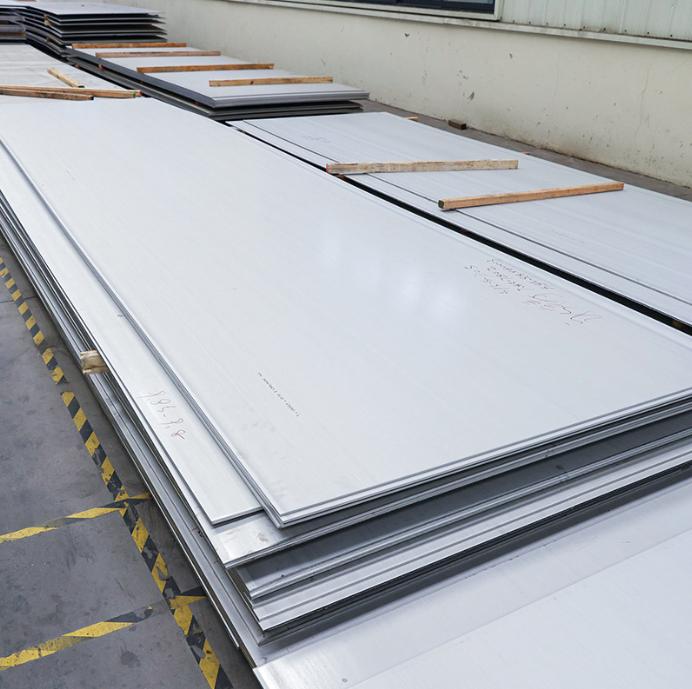
EN 10088-2 1.4404 316L Hot Rolled Sheet
Width:600 mm ~ 2 500 mm
Length:500 ~ 20 000 mm
Type: Plate
Material grade:Grade 316L
Products Description
What Is EN 10088-2 1.4404 316L Hot Rolled Stainless Steel Sheet?
EN 10088-2 1.4404 316L Hot Rolled Stainless Steel Sheet is an austenitic stainless steel product manufactured according to the European standard EN 10088-2. Its European material number is 1.4404, with the steel designation X2CrNiMo17-12-2, and it is commonly associated with 316L / UNS S31603.
This product is manufactured using a hot rolling process and can be supplied with a 1D annealed and pickled surface. Due to its molybdenum (Mo) content, 316L generally offers better resistance to pitting and crevice corrosion than 304L in many chloride-containing and corrosive environments.
Main Features
Standard: EN 10088-2
Material Number: EN 1.4404
Steel Designation: X2CrNiMo17-12-2
Common Grade: 316L
UNS: S31603
Manufacturing Process: Hot Rolled
Surface Finish: 1D Annealed and Pickled
Material Type: Austenitic Stainless Steel
Main Alloying Elements: Cr, Ni, Mo
Why Is 316L More Suitable Than 304L for Some Corrosive Environments?
316L contains approximately 2.0–2.5% molybdenum (Mo). Molybdenum improves resistance to localized corrosion, particularly pitting, in many chloride-containing environments. Therefore, 316L is widely used for:
Chemical processing equipment
Pharmaceutical equipment
Food processing equipment
Marine equipment
Water treatment equipment
Petrochemical equipment
Industrial storage tanks
What Does "1D Annealed and Pickled" Mean?
1D is a common surface condition for hot-rolled stainless steel products.
The typical manufacturing process is:
Hot Rolling → Annealing → Pickling
Pickling removes the oxide scale formed during hot rolling and heat treatment, producing a relatively uniform matte, non-reflective industrial surface.
Common Sizes Of X2CrNiMo17-12-2 316L stainless steel Sheet
| Thickness | Width | Length |
|---|---|---|
| 3 mm | 1500 mm | 3000 / 6000 mm |
| 4 mm | 1500 mm | 3000 / 6000 mm |
| 5 mm | 1500 / 2000 mm | 4000 / 6000 mm |
| 6 mm | 1500 / 2000 mm | 6000 mm |
Chemical Composition and Properties
Typical Chemical Composition (wt.%):
C ≤ 0.03% - Low carbon content helps reduce the risk of intergranular corrosion.
Cr 16.0–18.5% - Provides excellent general corrosion and oxidation resistance.
Ni 10.0–14.0% - Stabilizes the austenitic structure and improves toughness and formability.
Mo 2.0–2.5% - Enhances resistance to pitting and crevice corrosion, particularly in chloride-containing environments.
Performance Characteristics:
Excellent resistance to intergranular corrosion, making it well suited for welded components.
Excellent resistance to pitting and crevice corrosion in chloride-containing environments such as seawater and salt spray.
Generally non-magnetic in the annealed condition, with good machinability and excellent weldability.
For welding, appropriate heat input and interpass temperature control are recommended; an interpass temperature below 200°C is commonly used as a fabrication practice.
After solution annealing, typical tensile strength is approximately 500–700 MPa, with elongation ≥40%.
Excellent low-temperature toughness, making it suitable for applications requiring reliable performance at low temperatures.
Technical Requirements for 1.4404 Under EN 10088-2:2025
Manufacturing Process: Hot-rolled sheets and strips require controlled heating, finishing/rolling temperatures, and cooling conditions to achieve a uniform grain structure and dense, consistent microstructure.
Delivery Condition: Austenitic stainless steel is generally supplied in the solution-annealed condition to achieve the desired combination of ductility, formability, and corrosion resistance.
Surface Condition: Products can be supplied in surface conditions specified by EN 10088-2, such as 1D (hot rolled, annealed and pickled), 2B (cold rolled and skin passed), and 2R (bright annealed), depending on the product form and agreed specification.
Dimensions and Flatness: Hot-rolled sheets and strips must comply with the dimensional and shape tolerances specified by EN 10088-2, including thickness, width, flatness, and edge/shape requirements.
Internal Quality: Control of potentially harmful impurities, particularly phosphorus (P) and sulfur (S), as well as appropriate processing control, helps maintain material quality and minimize metallurgical defects such as sensitization.
Applications
EN 10088-2 1.4404 (316L) Hot Rolled Stainless Steel Sheet is widely used in demanding industrial applications where excellent corrosion resistance, weldability, and durability are required.
Chemical & Petrochemical Industry: Reactor vessels, heat exchangers, storage tanks, pumps, valves, piping components, and other corrosion-resistant equipment.
Marine & Offshore Engineering: Desalination equipment, seawater systems, marine components, offshore structures, and coastal architectural structures.
Food & Pharmaceutical Industry: Brewing equipment, dairy processing equipment, food-processing machinery, pharmaceutical reactors, storage tanks, and hygienic process equipment.
Energy Industry: LNG storage and processing equipment, low-temperature service components, energy-processing equipment, and selected cryogenic applications.
Water Treatment: Desalination plants, wastewater treatment equipment, water storage tanks, and corrosion-resistant process components.
General Industrial Fabrication: Pressure-related equipment, machine components, structural parts, brackets, frames, and fabricated corrosion-resistant components.
Material Selection Recommendations
If the application involves welding and exposure to chloride-containing environments, 1.4404 (316L) is generally preferred over 1.4401 (316).
When placing an order according to EN 10088-2, clearly specify the material grade, forming/manufacturing process, delivery condition, surface finish, dimensional tolerances, and other relevant requirements.
Packaging and Delivery
The stainless steel sheets are carefully packed for international transportation. Standard export packaging can include waterproof material, protective paper or film, steel strapping and suitable pallets or steel frames according to product dimensions and customer requirements.
Customized thickness, width, length, surface condition and packaging can be arranged for industrial orders.
Frequently Asked Questions (FAQ)
Is EN 1.4404 the same as 316L?
Yes. EN 1.4404 is the European material number commonly associated with X2CrNiMo17-12-2, while 316L is the widely used AISI designation. The exact equivalence should always be confirmed against the applicable material standard and certificate.
What does 1D mean in stainless steel?
1D is a hot-rolled stainless steel surface condition generally supplied after annealing and descaling/pickling. It has a relatively matte and non-reflective appearance.
What does annealed and pickled mean?
Annealing is a heat-treatment process used to obtain the required metallurgical condition and properties. Pickling removes oxide scale and surface contaminants generated during hot rolling and heat treatment.
Is 316L better than 304L?
316L generally provides better resistance to pitting and localized corrosion, particularly in many chloride-containing environments, because it contains molybdenum. However, 304L can be more economical when its corrosion resistance is sufficient for the application.
Can 316L 1.4404 be welded?
Yes. 316L has excellent weldability and is widely used for welded equipment and fabricated components.
Is 1.4404 stainless steel magnetic?
Annealed 316L is generally considered non-magnetic or weakly magnetic. Cold working or forming can increase its magnetic response.
Can the 1D surface be further processed?
Yes. The 1D surface can be further processed through grinding, brushing, polishing or other finishing operations when a smoother or decorative surface is required.
Difference Between 316L Hot Rolled Stainless Steel Sheet and 316L Hot Rolled Stainless Steel Plate?
316L Hot Rolled Stainless Steel Sheet and 316L Hot Rolled Stainless Steel Plate are essentially the same 316L / EN 1.4404 austenitic stainless steel material. The main differences lie in thickness, product classification, applications, and market terminology, rather than chemical composition.
Hot Tags: en 10088-2 1.4404 316l hot rolled sheet, China en 10088-2 1.4404 316l hot rolled sheet manufacturers, suppliers, factory, High Precision Round Bar, Hot Rolled Steel Strip, Mechanical Alloy Steel Plate, Stainless Steel Bar, Thick Wall Precision Steel Tube, UNS S32205 Stainless Steel Plate
You Might Also Like


Send Inquiry