

Why is steel more prone to fracture with higher carbon content?
Sep 18, 2025
Leave a message
Steel plays a crucial role in the industrial sector and is widely used in numerous industries, including construction, machinery manufacturing, automotive, and aerospace. As one of the most important alloying elements in steel, carbon content has a profound impact on its properties. In practical applications, we have found that steel with high carbon content is often more prone to fracture, which not only affects product quality and reliability but can also lead to serious safety accidents. Therefore, in-depth research on the reasons why high-carbon steel is prone to fracture is of great theoretical and practical significance.
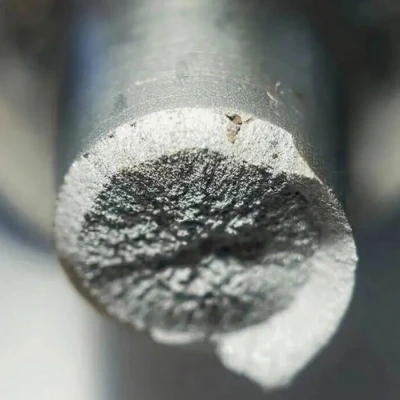
Carbon Forms in Steel and Their Impact on Microstructure
1. Carbon Forms
In steel, carbon exists primarily as interstitial solid solutions and carbides. When the carbon content is low, most carbon atoms dissolve in the iron lattice as interstitial solid solutions. As the carbon content increases, excess carbon atoms react with iron and other alloying elements to form various carbides, such as cementite (Fe₃C).
2. Impact on Microstructure
Changes in carbon content significantly alter the microstructure of steel. In low-alloy steels, as the carbon content increases, the pearlite content in the room-temperature equilibrium structure gradually increases, while the ferrite content decreases. Pearlite is a lamellar eutectoid structure composed of alternating ferrite and cementite. As the carbon content rises further, exceeding the eutectoid composition, secondary cementite appears in the steel's structure, and its amount increases with increasing carbon content.
Cementite is a hard and brittle phase, and its presence limits the steel's deformability. When steel is subjected to external forces, the ferrite phase can undergo some plastic deformation to absorb energy, while the cementite phase is less susceptible to deformation. As the carbon content increases, the amount of cementite in the steel increases and its distribution changes. This disrupts the continuity of the ferrite matrix, making stress concentration more likely when the steel is subjected to stress, thus creating conditions for crack initiation and propagation.
Effect of Carbon Content on Steel Mechanical Properties
1. Changes in Strength and Hardness
Generally speaking, the strength and hardness of steel increase with increasing carbon content. This is due to the solid solution strengthening effect of carbon atoms and the dispersion strengthening effect of carbides. The interstitial solid solution of carbon atoms in the iron lattice causes lattice distortion, hindering dislocation movement and thus increasing the strength of the steel. Simultaneously, the dispersed distribution of carbide particles in the matrix effectively prevents dislocation slip, further enhancing the strength and hardness of the steel.
2. Decreased Plasticity and Toughness
However, while strength and hardness increase, the plasticity and toughness of steel decrease significantly with increasing carbon content. Plasticity refers to the ability of a material to undergo permanent deformation without fracture under load, while toughness reflects its ability to absorb energy before fracture. The large amount of cementite phase in high-carbon steel makes it difficult for the steel to undergo uniform plastic deformation under load. When subjected to external forces, stress tends to concentrate at the interface between cementite and ferrite, causing stress in this area to exceed the bonding strength, thus initiating cracks.
From the perspective of fracture toughness, high-carbon steel has low fracture toughness. Fracture toughness is a material's ability to resist crack propagation and is closely related to its microstructure and composition. The hard and brittle cementite phase in high-carbon steel, as well as possible structural defects such as carbide segregation, reduce the steel's fracture toughness. When a crack forms in steel, the high stress at the crack tip rapidly ruptures the surrounding hard and brittle phases, leading to rapid crack propagation and ultimately fracture.
Fracture Mechanism of High-Carbon Steel
1. Crack Initiation
In high-carbon steel, due to the presence of cementite and its structural heterogeneity, cracks are prone to initiation at the following locations: First, at the interface between cementite and ferrite. Due to the significant difference in mechanical properties between the two phases, stress concentration easily occurs at this interface when subjected to stress. When the stress exceeds the bond strength of the interface, microcracks form. Second, at areas of carbide segregation. Carbide segregation causes localized regions with different composition and structure from the surrounding matrix, creating weak zones. Under external forces, these weak zones easily become crack initiation points.
2. Crack Propagation
Once a crack initiates, it rapidly propagates under stress. The low toughness of high-carbon steel reduces resistance to crack propagation. During crack propagation, it encounters the hard and brittle cementite phase. The crack may propagate along the interface between cementite and ferrite, or directly through the cementite phase. Due to the brittleness of the cementite phase, the crack does not require excessive energy to propagate through it, resulting in rapid crack growth.
3. Final Fracture
When a crack grows to a certain size, the effective load-bearing area of the steel decreases dramatically, leaving the remaining area unable to withstand the applied load, ultimately leading to fracture. This fracture process in high-carbon steel is often rapid and falls under the category of brittle fracture.
Case Studies of High-Carbon Steel Fracture in Practical Applications
1. Tool Manufacturing
In tool manufacturing, high-carbon steel is often used for cutting edges because its high hardness and strength maintain a sharp edge. However, during actual use, tools may suddenly break. This is because the cutting tool is subjected to alternating cutting and impact forces during the cutting process. The low toughness of high-carbon steel makes it prone to cracks initiating at the cutting edge or internal defects when subjected to significant impact. These cracks then rapidly propagate, leading to fracture.
2. Spring Manufacturing
Springs require a high elastic limit and fatigue resistance. Although high-carbon steel has high strength, its lack of plasticity and toughness during repeated bending or stretching can lead to fracture at stress concentration points. For example, automobile suspension springs, exposed to road impact and vehicle vibration over long periods of use, are prone to fatigue cracking and eventual fracture, compromising driving safety.
Measures to Improve the Fracture Proneness of High-Carbon Steel
1. Alloying
The microstructure and properties of high-carbon steel can be improved by adding alloying elements such as chromium, molybdenum, and vanadium. These alloying elements react with carbon to form more stable carbides, modifying the morphology and distribution of carbides and mitigating the adverse effects of cementite. For example, chromium forms finely dispersed chromium carbides, improving the balance between strength and toughness.
2. Optimizing the Heat Treatment Process
A reasonable heat treatment process can adjust the microstructure of high-carbon steel and improve its overall performance. For example, austempering can produce a bainite structure, which has an excellent balance of strength and toughness, enhancing the fracture resistance of high-carbon steel. Furthermore, tempering can eliminate quenching stresses and adjust the steel's hardness and toughness.
3. Controlling Carbide Segregation
During the steelmaking and casting processes, measures can be taken to control carbide segregation. For example, electromagnetic stirring and continuous casting process optimization can achieve a more uniform distribution of carbides in the steel, reducing localized carbide accumulation and thus the likelihood of crack initiation.
Conclusion
The primary reason why high-carbon steel is prone to fracture is that the increased carbon content alters the steel's microstructure, leading to an increase in the hard and brittle cementite phase and a reduction in the steel's plasticity and toughness. When subjected to stress, high-carbon steel is prone to crack initiation at the interface between cementite and ferrite or in areas of carbide segregation. Due to its low toughness, cracks will rapidly expand, eventually causing the steel to break. In practical applications, the fracture problem of high-carbon steel poses a safety hazard in many engineering fields. Through measures such as alloying, optimizing heat treatment processes, and controlling carbide segregation, the fracture tendency of high-carbon steel can be improved to a certain extent, thereby enhancing its overall performance. In future materials research and engineering applications, further in-depth research on the fracture mechanism of high-carbon steel is needed, and more effective improvement measures must be developed to meet the higher performance requirements of steel in different engineering fields.
Send Inquiry