

TP 410 Material Complete Guide
Jul 03, 2025
Leave a message
If you're searching for TP 410 material, you're likely an engineer specifying valve components, a procurement specialist vetting suppliers, or a fabricator working with corrosion-resistant alloys. This isn't just another stainless steel-it's a martensitic workhorse that blends durability with cost-efficiency. Let's break down what makes TP 410 special (and when you should think twice about using it).
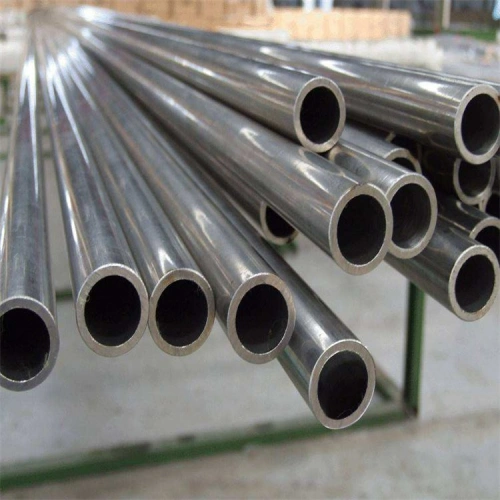
What is TP 410 Material?
TP 410 (UNS S41000) is a martensitic stainless steel widely used where strength and moderate corrosion resistance matter. Unlike the more popular 304 or 316 grades, TP 410 trades some rust resistance for:
✔ Higher hardness (up to 40 HRC when heat-treated)
✔ Better mechanical performance under stress
✔ Lower cost than austenitic grades
Typical Applications:
Valve trims, pump shafts
Fasteners, turbine blades
Cutlery, surgical instruments
TP 410 Material Properties: At a Glance
| Property | Value | Why It Matters |
|---|---|---|
| Chemical Composition | 11.5-13.5% Cr, ≤1.2% Mn, ≤0.15% C | Chromium provides corrosion resistance; carbon boosts hardness |
| Tensile Strength | 485 MPa (as annealed) → 1350 MPa (hardened) | Stronger than 304 when heat-treated |
| Corrosion Resistance | Moderate (good for mild acids, poor for chlorides) | Don't use in seawater! |
| Magnetic? | Yes (unlike 304/316) | Matters for MRI/electronic applications |
Engineer's Insight:
Heat treatment transforms TP 410-the annealed state is machinable; the hardened state rivals tool steel.
Not for saltwater-unless you enjoy rust spots.
Working with TP 410: Pro Tips & Pitfalls
Machining & Fabrication
✅ Do:
Use slow speeds + carbide tools (it work-hardens)
Anneal before heavy machining
Post-weld heat-treat to restore corrosion resistance
❌ Don't:
Assume it welds like 304 (preheat to 300°F minimum)
Use in chloride-rich environments without protective coatings
Heat Treatment Options
| Process | Result | Best For |
|---|---|---|
| Annealing (1650°F) | Softened (easy to machine) | Pre-machining state |
| Hardening (1900°F + air cool) | Maximum strength (HRC 40) | Wear-resistant parts |
| Tempering (300-600°F) | Balanced toughness | General engineering |
TP 410 vs. Other Stainless Steels
| Grade | Corrosion Resistance | Strength | Cost | Best Use Case |
|---|---|---|---|---|
| TP 410 | Moderate | Very High (when hardened) | $ | High-stress, low-corrosion environments |
| 304 | Excellent | Medium | $$ | Chemical/food processing |
| 17-4 PH | Good | Extreme | $$$ | Aerospace, nuclear |
Procurement Hack: Need better corrosion resistance but similar strength? Ask about TP 440C (higher chromium).
Common TP 410 Mistakes
Assuming it's "stainless" everywhere (it's not-saltwater = rust)
Skipping post-weld heat treatment (weld zones corrode first)
Overpaying for 304 when 410 would work (save 20-30% on non-corrosive apps)
Sourcing TP 410 Material: Smart Buyer's Checklist
✔ Certifications: ASTM A582 (bar), A176 (plate)
✔ Testing: Request hardness reports for heat-treated stock
✔ Alternative: Ask about "modified 410" with nitrogen for better corrosion resistance
Need TP 410 rods, plates, or custom parts? We supply mill-certified stock with full traceability-contact us for competitive pricing and technical support.
Mob: +86-13772502581
Email: Judesteel@Juqing.Hk
Send Inquiry