

Corrosion-Resistant 304 Stainless Steel Pipes for Seawater Applications – A Buyer’s Guide
Jun 10, 2025
Leave a message
Is 304 Stainless Steel Suitable for Seawater Use?
While Corrosion-resistant 304 pipes for seawater applications offer excellent corrosion resistance in many environments, careful consideration is required for seawater applications. Chlorides in seawater can cause pitting and crevice corrosion in standard 304 SS. However, with proper grade selection, surface treatment, and maintenance, 304 pipes can still be used in moderate marine environments.
This guide covers:
✔ 304 vs. 316L for seawater – which is better?
✔ How to enhance 304's corrosion resistance
✔ Best applications for 304 pipes in marine settings
✔ Key purchasing factors for seawater-resistant piping
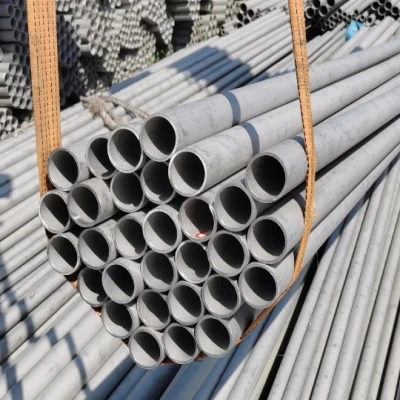
1. Can 304 Stainless Steel Pipes Handle Seawater?
- Where 304 SS Works in Marine Environments
Brackish water & low-salinity applications
Short-term seawater exposure (e.g., ship components, coastal structures)
Protected environments (coatings, cathodic protection)
- Where 304 SS May Fail
Continuous seawater immersion → High risk of pitting corrosion
High-chloride, high-temperature seawater → Accelerated degradation
Unprotected welds & joints → Vulnerable to crevice corrosion
Expert Tip: If your application involves permanent seawater submersion, upgrade to 316L stainless steel (with 2-3% molybdenum for superior chloride resistance).
2. 304 vs. 316L Stainless Steel for Seawater – Key Differences
| Property | 304 Stainless Steel | 316L Stainless Steel |
|---|---|---|
| Corrosion Resistance | Good (for mild marine exposure) | Excellent (best for seawater) |
| Molybdenum Content | None | 2-3% (enhances chloride resistance) |
| Cost | Lower (~$2.50-$4.00/lb) | Higher (~$4.50-$7.00/lb) |
| Best For | Coastal structures, short-term seawater contact | Offshore rigs, desalination plants, ship hulls |
Decision Guide:
Choose 304 if: Budget is limited, exposure is intermittent, or pipes are coated/protected.
Choose 316L if: Long-term seawater immersion, high corrosion risk, or critical marine infrastructure.
3. How to Improve 304's Seawater Resistance?
If you must use Corrosion-resistant 304 pipes for seawater applications, these methods help extend lifespan:
1. Electropolishing
Removes surface impurities & improves passive oxide layer.
Reduces pitting risk (Ra ≤ 0.5 µm recommended).
2. Protective Coatings (Epoxy, Rubber, or Paint)
Prevents direct chloride contact.
Common in marine pilings & offshore structures.
3. Cathodic Protection
Uses sacrificial anodes (zinc/aluminum) to prevent corrosion.
Ideal for submerged pipelines & ship hulls.
4. Regular Cleaning & Maintenance
Flush with freshwater to remove salt deposits.
Inspect for early signs of pitting.
4. Best Applications for 304 Pipes in Seawater
Despite limitations,Corrosion-resistant 304 pipes for seawater applications are used in:
🔹 Coastal architectural railings & fixtures
🔹 Marine exhaust systems (short-term exposure)
🔹 Boat fittings & deck hardware (above waterline)
🔹 Brackish water pipelines (low salinity)
⚠️ Avoid Using 304 SS For:
Desalination plants (high chloride concentration)
Submerged seawater pipelines (risk of rapid pitting)
Saltwater cooling systems (unless protected)
5. Buying Guide: Key Specs for Marine-Grade 304 Pipes
When ordering 304 stainless steel pipes for seawater, verify:
✔ Material Certification – ASTM A312 / A778 compliant
✔ Surface Finish – Electropolished or passivated for corrosion resistance
✔ Wall Thickness – Thicker walls resist pitting longer
✔ Welding Quality – Properly pickled & passivated to prevent weak spots
Pro Tip: Ask for "Low Carbon 304L" if welding is required-reduces sensitization risk.
6. 304 vs. Duplex Steel – Is There a Better Alternative?
For harsh seawater environments, duplex stainless steels (e.g., 2205) offer:
✅ 2x stronger than 304/316
✅ Superior chloride resistance
✅ Long-term cost savings (less maintenance)
Best for: Offshore oil rigs, seawater pumps, and desalination systems.
7. FAQ – Quick Answers for Buyers
Q: How long will 304 stainless steel last in seawater?
A: Unprotected, it may last 6 months–2 years. With coatings/maintenance, 5+ years.
Q: Can I use 304 pipes for a saltwater aquarium?
A: Not recommended-316L or titanium is safer for long-term exposure.
Q: Does galvanic corrosion affect 304 in seawater?
A: Yes! Avoid contact with carbon steel or aluminum-use dielectric unions.
Q: What's the price difference between 304 and 316L pipes?
A: 316L costs ~20-40% more, but lasts longer in seawater.
8. Conclusion: Should You Use 304 or Upgrade?
For mild marine exposure → 304 SS pipes (with protection) are cost-effective.
For permanent seawater use → Upgrade to 316L or duplex steel.
Need Marine-Grade Stainless Steel Pipes?
Get a FREE Corrosion-resistant 304 pipes for seawater applications quote & corrosion-resistance consultation today!
Mob: +86-13772502581
Email: judesteel@juqing.hk
Send Inquiry