

What is the chromium content in stainless steel pipe caps?
Oct 13, 2026
Leave a message
Hey there, if you're here because you're spec'ing stainless steel pipe caps (or just trying to figure out why everyone obsesses over chromium in them), you're in the right place. I've been selling stainless steel pipe caps for over 10 years now, and let me tell you-crimes against pipe fittings happen when people get this number wrong. Too little chromium, and your caps will rust before the first pressure test. Too much, and you're wasting money on stuff no one needs. Today we're breaking down exactly what chromium content matters for stainless steel pipe caps, no confusing metallurgy jargon (I promise).
First off, let's get one thing straight: not all stainless steel is the same. Chromium is the secret sauce that makes stainless steel… well, stainless. Here's the simple rule: stainless steel needs a minimum of 10.5% chromium by mass to form that invisible, protective chromium oxide layer that stops rust from setting in. If your pipe cap has less than that? It's basically fancy regular steel, and it'll corrode faster than a paper cup in a rainstorm. But for most pipe cap applications-think plumbing, chemical processing, food and beverage, even oil and gas-you're looking at two workhorse grades: 304 and 316L. These aren't random picks; they're the most widely used because they hit that chromium sweet spot for performance and cost.
Let's start with 304 stainless steel, which is the workhorse of the entire industry. If you've ever seen a stainless steel sink, that's 304. For 304 pipe caps, the chromium content sits right between 18% and 20%. That's not a guess, by the way-we follow strict industry standards to make sure every cap leaves our facility within that range. Pair that with about 8% nickel, and you've got a material that resists rust in most everyday environments: ambient air, freshwater, mild chemicals, even mild food acids like vinegar or lemon juice. This is the grade I recommend for 9 out of 10 standard applications. But wait, before you grab any old 304 cap, make sure it's not cut corners. Some cheaper knock-offs might sneak in lower chromium to save a buck-always ask for a material test certificate, and stick to reputable suppliers.
Then there's 316L stainless steel, the heavy-hitter for harsher environments. The chromium here is a little lower at 16% to 18%-wait, why is that? Oh right, because 316L adds molybdenum, a different alloy that takes over the rust-fighting job in specific cases. The molybdenum makes 316L resistant to chloride corrosion, which is huge if you're working with saltwater, bleach, salt-based chemicals, or even outdoor applications near coastal areas (where salt air can eat through 304 in no time). The "L" in 316L stands for low carbon, which means it's less likely to have those weird, weak spots from welding-perfect for pipe caps that get welded on. If your operation is dealing with those tougher conditions, 316L is non-negotiable.
Now, you might be wondering: do other grades matter for pipe caps? Sure, occasionally. You'll see 321 (titanium-stabilized) for high temp applications, but that's niche. And for super specific cases, like ultra-hygienic food or pharmaceutical processing, some customers ask about our Hygienic Stainless Steel Pipe Fittings, which include pipe caps made with even tighter alloy control-though still sticking to that 10.5% minimum chromium rule.
Wait, let's circle back to why chromium is so critical here, specifically for pipe caps. Pipe caps aren't just random metal discs; they seal the end of a pipe, so they're under pressure, exposed to whatever's flowing through the line, and often welded on. If the chromium is off, that protective layer won't form evenly. You might get tiny pinhole rust spots, or the cap could crack under pressure. I've seen this happen firsthand-once a customer bought cheap 304 caps from a fly-by-night supplier, and within a month, their outdoor piping was covered in rust blisters. They ended up switching to our caps, and we always send material specs with every order to avoid that headache.
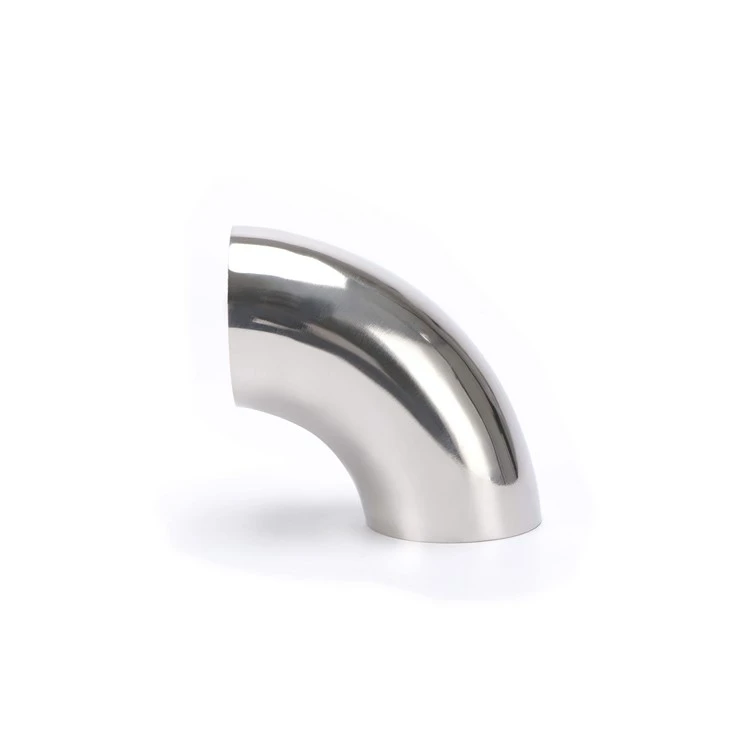

So, how do you make sure you're getting the right chromium content for your pipe caps? First, match your environment to the grade we talked about: 304 for general use, 316L for corrosive conditions. Second, check that the cap meets industry standards-like ASTM A403, which covers stainless steel pipe fittings, including caps. I can't stress this enough; ASTM A403 ensures that every part, right down to the chromium percentage, is tested and within spec. You can look up our line of ASTM A403 Stainless Steel Pipe Fittings, including our full range of caps, on our site.
A quick note on related fittings too, because if you're working on a piping system, you're probably needing more than just caps. For example, if you're running a system that needs to turn a corner, our 45° Elbow Stainless Steel Pipe Fittings pair perfectly with our caps for clean connections. And if you need to branch a pipe line, our SS304 316L Stainless Steel Tee Pipe Fittings are a go-to, all made with the same consistent chromium content as our caps. Even for forged fittings, like our 304 Forged Socket Welding Tee Stainless Steel Pipe Fittings, we stick to those exact chromium ranges so every part in your system works together seamlessly.
Now, a common question I get: what if I need a cap for a super extreme environment? Like, something that's handling high heat or really aggressive chemicals. We do offer specialty grades, but even then, chromium is still the base. For example, duplex stainless steels might have around 22% chromium, but that's for high-pressure, high-temp oil and gas applications. But unless you're in that exact niche, you don't need to overcomplicate it.
Here's the thing as a supplier: we don't cut corners on chromium. Every batch of our pipe caps is tested to confirm the chromium is within the required range. I've had customers come to me saying they found a cheaper cap online, and I always tell them: ask for the material test report. If they can't give you one, walk away. The last thing you want is a pipe cap failing mid-operation, causing downtime, leaks, or worse-costing you way more than you saved on cheap parts.
Let's recap the key chromium numbers for stainless steel pipe caps, so you don't have to go searching through specs later:
- Minimum non-negotiable for any stainless steel cap: 10.5% chromium (the legal minimum, basically)
- Standard 304 cap: 18-20% chromium, ideal for most indoor/outdoor general use
- 316L cap: 16-18% chromium, paired with molybdenum, for chloride-rich or highly corrosive environments
If you're still unsure which grade or chromium content is right for your project, or you want to check out our full line of caps and compatible fittings, feel free to reach out to our team for a no-hassle chat. We don't push the most expensive part-we help you get exactly what you need, with the right chromium content, to get the job done right.
References:
- ASME B16.9, Factory-Made Wrought Steel Buttwelding Fittings
- ASTM A403/A403M, Standard Specification for Wrought Austenitic Stainless Steel Piping Fittings
- Stainless Steel World, "The Role of Chromium in Stainless Steel Corrosion Resistance"
- NACE International, "Corrosion Resistance of Stainless Steels in Chloride Environments"
Send Inquiry