

What are the quality control measures in 310S stainless steel tube production?
Oct 14, 2026
Leave a message
If you've ever worked in high-temperature industries like petrochemical processing, power generation, or aerospace component manufacturing, you know that not all stainless steel tubes are created equal. As a 310S stainless steel tube supplier, I've seen firsthand how even a tiny defect in material quality can lead to costly downtime, safety hazards, or catastrophic system failures-especially when those tubes are exposed to sustained temperatures up to 1200°C (2192°F). That's why quality control isn't just a step in our production process; it's the backbone of how we build trust with clients who rely on our tubes to perform when nothing else will. Let me walk you through the rigorous quality control measures we implement at every stage of 310S stainless steel tube production, from raw material selection to final shipment.
Raw Material Verification: The Foundation of Every Great Tube
310S stainless steel is an austenitic alloy with 25% chromium and 20% nickel, plus low carbon content (≤0.08%) to resist intergranular corrosion at high temperatures. But even the highest-quality alloy is only as good as the raw materials that go into it. We don't just buy bulk metal from any mill-we require full material test certificates (MTCs) from our primary suppliers, which detail the exact chemical composition, mechanical properties, and manufacturing history of each batch.
Before any raw material is even moved to our production floor, our quality assurance (QA) team conducts a first-round verification: using a portable optical emission spectrometer (OES), we test a sample of the billet or sheet to confirm it meets the exact 310S specifications. No exceptions. This is a critical early step because mixing in even small amounts of an incorrect alloy could compromise the tube's ability to withstand high heat or corrosive environments.
We also cross-reference these raw material specs with industry standards to ensure we're aligning with best practices for similar high-performance products. For example, while our 310S tubes follow their own dedicated specifications, we often benchmark against standards for other trusted steel products to ensure consistency-like checking how chemical purity requirements compare to those for ASTM A249 TP304/304L Welded Steel Pipe, a widely used austenitic product in medium-temperature applications. It's a smart way to draw lessons from proven frameworks and apply them to our 310S line.
In-Process Quality Control: Catching Issues Before They Grow
Once the raw material passes initial checks, production begins-whether we're manufacturing seamless or welded 310S tubes, both of which are common for our clients. At every step of forming, heating, and shaping, we have QA personnel stationed to monitor and adjust processes in real time.
For seamless 310S tubes, the process starts with piercing a solid billet to create a hollow shell, then elongating and sizing it through a series of mandrel mills. During this stage, we use ultrasonic testing (UT) to scan the internal and external surfaces of the hot tube at multiple points. UT detects internal defects like cracks, porosity, or inclusions that would be impossible to see with the naked eye. For welded 310S tubes, the most critical step is the fusion welding process: we use high-frequency induction welding (HFIW) or tungsten inert gas (TIG) welding, and immediately after welding, we perform eddy current testing (ECT) to check for uneven weld penetration, gaps, or residual stresses that could weaken the joint.
Heat treatment is another non-negotiable in our in-process controls. 310S tubes require solution annealing at 1040–1150°C to dissolve chromium carbides and restore corrosion resistance. We monitor every annealing furnace's temperature, gas atmosphere, and residence time with calibrated sensors-even keeping a backup log to cross-verify. A furnace temperature that's off by just 20°C could leave chromium carbides precipitated along grain boundaries, making the tube susceptible to corrosion when exposed to hot flue gases or chemical streams.
We also regularly compare our in-process checks to industry standards for similar welded and seamless products. For example, our UT and ECT testing protocols follow many of the same principles used to inspect 3-inch Seamless Pipe, a popular size range that shares many manufacturing steps with our smaller 310S tubes. This consistency in inspection methods means we can be confident our quality checks are as reliable as those for established, high-demand products.
Dimensional and Surface Finishing: Meeting Exact Client Specifications
Even a tube with perfect chemistry and no internal defects is useless if it's the wrong size or has a rough surface that interferes with installation or performance. That's why we have strict controls for every dimensional parameter, from outer diameter (OD) and inner diameter (ID) to wall thickness and straightness.
Throughout production, we use precision measuring tools like coordinate measuring machines (CMMs) and laser gauges to check dimensions at both mid-length and the ends of each tube. For critical applications, we can hold tolerances as tight as ±0.05mm for wall thickness, which is essential for clients designing systems that operate at high pressures in high temperatures. We also test straightness by running each tube through a straightening machine and then measuring any deviations with a straightedge and feeler gauges-no tube leaves our facility if it's more than 1mm bent over a 3-meter length.
Surface quality is equally important. 310S tubes are often used in environments where even minor surface scratches or roughness can act as initiation points for corrosion or fatigue cracking. After cold drawing or finishing, we perform visual inspection under bright LED lights, plus surface roughness testing using a profilometer to ensure the Ra value (average roughness) meets our clients' requirements-typically ≤0.8μm for standard applications, and lower for those used in semiconductor or pharmaceutical manufacturing.
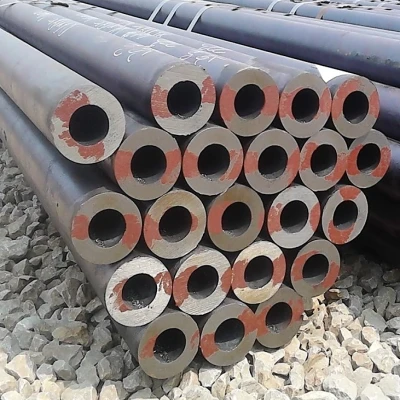

To make sure our dimensional and surface controls align with industry expectations, we reference standards for other seamless stainless steel products, like ASTM A790 Duplex 2205 Pipe, which has similar dimensional tolerance requirements for high-pressure, high-temperature use. This cross-referencing helps us avoid over- or under-specifying dimensions, ensuring our 310S tubes are both functional and cost-effective for our clients.
Final Non-Destructive Testing (NDT): The Last Line of Defense
Before any 310S stainless steel tube leaves our facility, it undergoes a full battery of non-destructive tests to ensure it meets all quality and safety standards. This isn't a one-size-fits-all process-we tailor tests to the tube's size, grade, and intended application.
First, all tubes undergo a final eddy current test to recheck weld integrity (for welded tubes) or surface and near-surface defects (for seamless tubes). For larger-diameter tubes, we use hydrostatic testing: we fill the tube with water, pressurize it to 1.5 times the maximum working pressure specified for the tube, and hold for 30 seconds. No leaks, no permanent deformation-if either happens, the tube is rejected. This test is especially critical for 310S tubes used in high-pressure piping systems or heat exchangers.
We also perform random destructive testing (DT) on every batch, where we cut a small section from the end of a tube to test its mechanical properties: tensile strength, yield strength, and elongation. The minimum tensile strength for 310S is 480 MPa, yield strength is ≥205 MPa, and elongation is ≥40%-we don't ship a batch if it doesn't meet these numbers. We also do intergranular corrosion testing, following ASTM A262 practices, to confirm the low carbon content prevents corrosion in heat-affected zones.
Our final step is a third-party audit, where an independent certified inspector from a global testing agency reviews our entire test documentation, re-tests a sample tube, and issues a certificate of compliance. This gives our clients the peace of mind that our 310S tubes are not only meeting our own internal standards but also recognized by independent experts.
Beyond Production: Supporting Long-Term Quality and Compliance
As a 310S stainless steel tube supplier, our quality commitment doesn't end when the tube is loaded onto the truck. We provide detailed packing lists with every shipment, including all test certificates, dimensional reports, and material specifications, so our clients can easily integrate our tubes into their own quality management systems. We also offer technical support to help clients select the right size, grade, and finish for their specific application, and we stand behind our products with a warranty that covers manufacturing defects-something many smaller suppliers can't offer.
For industries that need consistent, reliable high-temperature tubing, choosing a supplier with rigorous quality control isn't just a preference-it's a necessity. We've built our business on delivering 310S tubes that perform in the toughest conditions, and every measure we implement, from raw material testing to final hydrostatic checks, is designed to uphold that promise. If you're looking for a trusted supplier of high-quality 310S stainless steel tubes, or if you have questions about our production processes or specifications, we'd be happy to discuss your needs and help you find the right solution for your project.
References
- ASTM International. (2020). Standard Specification for Welded Austenitic Steel Pipe and Tubes for High-Temperature Service (ASTM A249).
- ASTM International. (2021). Standard Specification for Seamless Carbon Steel Pipe for High-Temperature Service (ASTM A106).
- ASTM International. (2019). Standard Test Methods for Detecting Sharply Discontinuous Seams and Other Surface or Near-Surface Indications in Tubular Magnetic and Nonmagnetic Articles by the Eddy-Current Method (ASTM E273).
- ASM International. (2018). Metallography and Microstructure of Stainless Steels.
- National Board of Boiler and Pressure Vessel Inspectors. (2022). Quality Control Guidelines for High-Temperature Piping Systems.
Send Inquiry