

What is the hardness of 310S stainless steel tube?
Dec 09, 2025
Leave a message
As a supplier of 310S stainless steel tubes, I often get asked about the hardness of 310S stainless steel tubes. So, I thought it'd be cool to write this blog to share what I know and help you understand this stuff better.
First off, let's talk a bit about 310S stainless steel. It's an austenitic stainless steel with high chromium and nickel content. This composition gives it excellent high - temperature resistance, oxidation resistance, and corrosion resistance. That's why 310S stainless steel tubes are widely used in industries like heat treating, power generation, and chemical processing.
Now, let's dive into the question of its hardness. Hardness is a measure of a material's resistance to local deformation, like scratching, indentation, or abrasion. There are different ways to measure the hardness of steel, and the commonly used methods for 310S stainless steel tubes include the Rockwell hardness test, Brinell hardness test, and Vickers hardness test.
The Rockwell hardness test is quick and easy. It measures the depth of penetration of an indenter under a specific load. For 310S stainless steel tubes, the Rockwell hardness can vary depending on the manufacturing process and heat treatment. Generally, in the annealed state, the Rockwell hardness (HRB) of 310S stainless steel is around 90 - 100. This relatively low hardness in the annealed condition makes the tubes easy to form and weld. However, if the tubes undergo cold working, like cold rolling or drawing, the hardness can increase significantly. Cold working causes the grains in the steel to deform and align, which leads to work - hardening. After cold working, the Rockwell hardness (HRC) can reach up to around 20 - 30, making the tubes stronger and more resistant to wear.
The Brinell hardness test uses a hard ball indenter to make an indentation on the surface of the steel under a large load. The diameter of the indentation is then measured, and the Brinell hardness number (HB) is calculated. For 310S stainless steel tubes in the annealed state, the Brinell hardness is typically in the range of 180 - 220 HB. Similar to the Rockwell test, cold working can increase the Brinell hardness.
The Vickers hardness test is more precise and can be used for a wide range of material thicknesses and hardness levels. It uses a square - based pyramidal indenter. The Vickers hardness of annealed 310S stainless steel tubes is usually around 200 - 250 HV. Once again, cold working will cause an upward shift in the Vickers hardness values.
Why is understanding the hardness of 310S stainless steel tubes so important? Well, it has a big impact on how the tubes can be used. For example, if you're in a low - stress application where forming and welding are important, an annealed tube with lower hardness might be the best choice. But if your application involves high - stress conditions, like heavy - duty machinery or high - speed moving parts, you'd probably want a cold - worked tube with higher hardness.
Let's also talk about how the hardness of 310S stainless steel tubes compares with other types of stainless steel tubes. Take the JIS G3459 Stainless Steel Pipe. JIS G3459 specifies stainless steel pipes for general structure and mechanical structure. The hardness of these pipes can vary depending on the specific grade within the standard. Some grades might be harder than the annealed 310S due to different alloying elements and manufacturing processes, while others could be softer.
Then there's the 2507 Stainless Steel Pipe. 2507 is a super duplex stainless steel with high strength and excellent corrosion resistance. Compared to 310S, 2507 generally has a higher hardness, especially in the hardened state. This is because of its unique microstructure, which combines austenite and ferrite phases, making it more resistant to deformation.
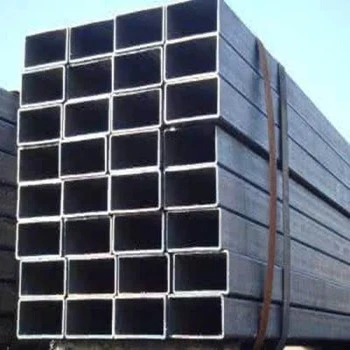
And don't forget about Rectangular Stainless Steel Tubing. The hardness of rectangular tubing, similar to round tubes, can be adjusted through heat treatment and cold working. However, the shape and additional machining processes might affect the overall hardness distribution across the tubing.
Another factor that affects the hardness of 310S stainless steel tubes is heat treatment. If the tubes are annealed, which involves heating them to a specific temperature and then cooling them slowly, it will relieve internal stresses and lower the hardness, resulting in improved ductility. On the other hand, if they're subjected to a solution treatment (heating to a high temperature followed by rapid cooling), it can put the alloying elements in a solid - solution state, which can be followed by cold working to increase hardness and strength.
I've dealt with so many customers over the years, and I know that choosing the right hardness for 310S stainless steel tubes can be a real headache. That's where my expertise comes in. Whether you need tubes for a simple DIY project or a large - scale industrial application, I can help you select the right 310S stainless steel tubes with the appropriate hardness.
If you're still not sure which hardness level is best for your project, don't hesitate to reach out. I'm here to help you make the right decision. Whether you need more information, want to discuss your specific requirements, or are ready to place an order, just get in touch. I'll work with you every step of the way to ensure you get the best 310S stainless steel tubes for your needs.

In conclusion, the hardness of 310S stainless steel tubes is a key factor that can influence their performance and suitability for different applications. By understanding the different hardness measurement methods, the effects of manufacturing processes and heat treatment, and how it compares with other types of stainless steel, you'll be better equipped to make an informed decision. So, if you're in the market for 310S stainless steel tubes, give me a shout, and let's start this journey together.
References:
- ASM Handbook Volume 1: Properties and Selection: Irons, Steels, and High - Performance Alloys
- Stainless Steel Handbook by The Nickel Institute
Send Inquiry