

What is the fatigue resistance of 316L stainless steel pipe?
Sep 23, 2026
Leave a message
What is the fatigue resistance of 316L stainless steel pipe?
As a 316L stainless steel pipe supplier, I often encounter inquiries from clients regarding the fatigue resistance of these pipes. Fatigue resistance is a crucial property, especially in applications where the pipes are subjected to cyclic loads. Understanding this characteristic helps in determining the suitability of 316L stainless steel pipes for various purposes.
Understanding Fatigue in Metals
Before delving into the fatigue resistance of 316L stainless steel pipes, it's important to understand what fatigue is. Fatigue occurs when a material is subjected to repeated cyclic loading, which leads to the formation and propagation of cracks. These cracks can eventually cause the material to fail, even if the applied stress is well below its ultimate tensile strength. The phenomenon of fatigue is complex and is influenced by several factors, including the material's composition, microstructure, surface finish, and the nature of the cyclic loading.
Composition and Microstructure of 316L Stainless Steel
316L stainless steel is a low - carbon variation of 316 stainless steel. It contains approximately 16 - 18% chromium, 10 - 14% nickel, and 2 - 3% molybdenum. The addition of molybdenum enhances the corrosion resistance of the steel, making it suitable for use in harsh environments such as marine and chemical processing industries. The low carbon content reduces the risk of carbide precipitation during welding, which can lead to intergranular corrosion.
The microstructure of 316L stainless steel is austenitic, which is known for its good ductility, toughness, and corrosion resistance. The austenitic structure also contributes to the material's fatigue resistance. Austenite is a face - centered cubic (FCC) crystal structure, which can accommodate a certain amount of deformation without the formation of microcracks. This ability to deform plastically helps in redistributing the stress during cyclic loading, thereby delaying the initiation and propagation of cracks.
Factors Affecting the Fatigue Resistance of 316L Stainless Steel Pipe
Surface Finish
The surface finish of a 316L stainless steel pipe has a significant impact on its fatigue resistance. A smooth surface finish reduces the stress concentrations that can act as crack initiation sites. Poor surface finishes, such as those with scratches, pits, or rough welds, can increase the likelihood of crack formation. For example, in applications where the pipe is exposed to fluid flow, a rough surface can cause turbulence, which in turn can lead to localized stress concentrations and reduced fatigue life.
Stress Concentration
Stress concentrations can occur at geometric discontinuities in the pipe, such as holes, notches, or bends. These areas experience higher stresses compared to the rest of the pipe during cyclic loading. For instance, a sharp - edged notch in the pipe can cause stress concentrations up to several times the nominal stress. To improve fatigue resistance, designers often use rounded corners and smooth transitions at areas of geometric change.
Corrosion
Corrosion can significantly reduce the fatigue resistance of 316L stainless steel pipes. Even though 316L is highly corrosion - resistant, in aggressive environments, corrosion can lead to the formation of pits and crevices. These pits act as stress concentrators and can accelerate the crack initiation process. For example, in a marine environment, the presence of chloride ions can cause pitting corrosion, which can greatly reduce the fatigue life of the pipes.
Loading Conditions
The nature of the cyclic loading, including the stress amplitude, frequency, and mean stress, affects the fatigue resistance of the pipes. Higher stress amplitudes generally lead to shorter fatigue lives. The frequency of loading can also have an impact. At high frequencies, the material may not have enough time to relax, leading to increased stress buildup. Mean stress, which is the average stress during the cyclic loading, can also influence fatigue life. Tensile mean stresses tend to reduce fatigue life, while compressive mean stresses can sometimes improve it.
Testing the Fatigue Resistance of 316L Stainless Steel Pipe
To determine the fatigue resistance of 316L stainless steel pipes, various testing methods are employed. One of the most common methods is the rotating - beam fatigue test, where a specimen of the pipe is subjected to bending stress while being rotated. The number of cycles to failure is recorded at different stress levels, and a fatigue curve (S - N curve) is plotted. This curve shows the relationship between the stress amplitude and the number of cycles to failure.
Another method is the axial fatigue test, where the pipe specimen is subjected to cyclic axial tension or compression. This test is more representative of real - world applications where the pipes are subjected to axial loads, such as in pipelines or structural supports.
Applications and Importance of Fatigue Resistance
316L stainless steel pipes are widely used in many industries due to their excellent corrosion resistance and good fatigue resistance. In the aerospace industry, these pipes are used in hydraulic systems, where they are subjected to cyclic pressure changes. The high fatigue resistance of 316L ensures the reliability and safety of these systems over long service lives.
In the chemical processing industry, 316L pipes are used to transport corrosive chemicals. The combination of corrosion resistance and fatigue resistance is crucial in this application, as the pipes are often exposed to harsh chemicals and mechanical vibrations.
In the medical field, 316L stainless steel is used for surgical instruments and implants. The fatigue resistance of the pipes ensures that they can withstand the repeated use and mechanical stresses without failure.
Comparison with Other Stainless Steel Pipes
When comparing the fatigue resistance of 316L stainless steel pipes with other types of stainless steel pipes, it's important to consider the specific application requirements. For example, S32750 Stainless Steel Pipe | UNS 2507 Super Duplex Pipe has a duplex microstructure, which combines the advantages of austenite and ferrite. Duplex stainless steels generally have higher strength and better fatigue resistance than austenitic stainless steels like 316L in some applications. However, 316L offers better formability and weldability, which may be more important in certain fabrication processes.

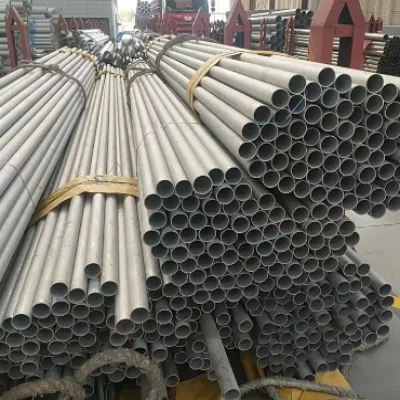
304 ERW Stainless Steel Pipe is another common type of stainless steel pipe. While it has good corrosion resistance, it may not have the same level of fatigue resistance as 316L, especially in applications where the pipes are exposed to corrosive environments. The addition of molybdenum in 316L enhances its resistance to pitting and crevice corrosion, which can improve its fatigue performance in such environments.
UNS S32615 Seamless Pipe and UNS S44600 Seamless Steel Pipe are also used in specific applications. Each of these pipes has its own set of properties, and their fatigue resistance can vary depending on the composition, microstructure, and manufacturing process.
Conclusion
The fatigue resistance of 316L stainless steel pipes is a complex property that is influenced by many factors, including the material's composition, microstructure, surface finish, stress concentration, corrosion, and loading conditions. As a supplier, I understand the importance of these factors in ensuring the performance and reliability of our products.
If you are in need of 316L stainless steel pipes for your project, it is crucial to consider the fatigue requirements of your application. We, as a trusted supplier, can provide you with high - quality pipes that meet your specific needs. Our team of experts can also offer advice on how to optimize the fatigue performance of the pipes through proper design and installation. If you are interested in purchasing our 316L stainless steel pipes or have any questions about fatigue resistance or other properties, please feel free to contact us for further discussions and negotiation.
References
- ASM Handbook, Volume 19: Fatigue and Fracture, ASM International
- Callister, W. D., & Rethwisch, D. G. (2018). Materials Science and Engineering: An Introduction. Wiley.
- Metals Handbook, Volume 9: Fractography and Atlas of Fractographs, ASM International
Send Inquiry