

Are there any differences in the performance of stainless steel pipe fittings made from different production processes?
Sep 22, 2026
Leave a message
Hey there! I'm a supplier of stainless steel pipe fittings, and I often get asked if there are differences in the performance of stainless steel pipe fittings made from different production processes. Well, the answer is a resounding yes! In this blog post, I'll dive into the details and explain how various production methods can impact the performance of these crucial components.
First off, let's talk about some common production processes for stainless steel pipe fittings. There are casting, forging, machining, and welding, among others. Each of these methods has its own set of characteristics, advantages, and limitations, which ultimately affect the performance of the final product.
Casting
Casting is a process where molten stainless steel is poured into a mold and allowed to solidify. This method is great for producing complex shapes with detailed designs. It's relatively inexpensive and can be used to make large quantities of fittings in a short time. However, cast fittings may have some internal porosity and a coarser grain structure compared to those made by other methods.
The porosity in cast fittings can lead to a decrease in strength and corrosion resistance. Small voids within the material can act as stress concentrators, making the fitting more prone to cracking under pressure. Additionally, the coarser grain structure may not provide the same level of resistance to corrosion as a finer-grained material. For applications where high pressure and high corrosion resistance are required, Cast fittings may not be the best choice).
Forging
Forging involves shaping stainless steel by applying compressive forces. This process uses a hammer or a press to deform the metal into the desired shape. Forged fittings have a much denser and more uniform grain structure compared to cast fittings. The forging process aligns the grains in the direction of the applied force, resulting in improved mechanical properties.
Forged stainless steel pipe fittings are known for their high strength, toughness, and resistance to fatigue. They can withstand high pressures and extreme temperatures without deforming or cracking. This makes them ideal for applications in industries such as oil and gas, chemical processing, and power generation. However, forging is a more expensive and time-consuming process than casting, so it may not be suitable for all projects, especially those with tight budgets or large production volumes.
Machining
Machining is a subtractive manufacturing process where material is removed from a stainless steel workpiece to create the desired shape. This can be done using various tools such as lathes, mills, and drills. Machined fittings offer high precision and a smooth surface finish. They can be made to very tight tolerances, ensuring a perfect fit in the piping system.
The performance of machined stainless steel pipe fittings is generally excellent. The machining process can produce fittings with consistent dimensions and mechanical properties. However, machining is a relatively slow and costly process, especially for complex shapes. It also generates a significant amount of waste material, which can increase the overall cost of production.
Welding
Welding is a process that joins two or more pieces of stainless steel together to form a fitting. There are several types of welding processes, including TIG (Tungsten Inert Gas) welding, MIG (Metal Inert Gas) welding, and arc welding. Welded fittings can be made to custom sizes and shapes, and they are often used in applications where a seamless joint is required.
The performance of welded stainless steel pipe fittings depends largely on the quality of the weld. A well-executed weld can provide a strong and durable joint with excellent corrosion resistance. However, if the welding process is not carried out correctly, it can lead to defects such as porosity, cracks, and lack of fusion. These defects can compromise the integrity of the fitting and reduce its performance.
Impact on Performance
Now that we've covered the different production processes, let's take a closer look at how they impact the performance of stainless steel pipe fittings in various aspects.
Strength
As mentioned earlier, forged fittings generally have the highest strength due to their dense and uniform grain structure. They can withstand high pressures and mechanical stresses without failing. Cast fittings, on the other hand, may be weaker due to internal porosity. Machined and welded fittings can also have good strength, but it depends on the quality of the material and the manufacturing process.
Corrosion Resistance
Corrosion resistance is a critical factor in stainless steel pipe fittings, especially in applications where the fittings are exposed to harsh environments. Forged and machined fittings typically offer better corrosion resistance because they have a more uniform and fine-grained structure. Cast fittings may be more prone to corrosion due to porosity. Welded fittings require proper post-weld treatment to ensure good corrosion resistance, as the heat-affected zone can be more susceptible to corrosion.
Dimensional Accuracy
Machined fittings are known for their high dimensional accuracy. They can be made to very tight tolerances, which is essential for a proper fit in the piping system. Forged and welded fittings can also achieve good dimensional accuracy, but it may be more challenging to control the dimensions during the manufacturing process. Cast fittings may have some dimensional variations, especially for complex shapes.
Surface Finish
The surface finish of stainless steel pipe fittings can affect their performance in terms of flow characteristics and corrosion resistance. Machined fittings usually have a smooth surface finish, which can reduce friction and improve the flow of fluids. Cast fittings may have a rougher surface finish, which can lead to increased friction and potential corrosion sites. Forged and welded fittings can have a range of surface finishes, depending on the post-processing steps.
Real-World Applications
The performance differences between stainless steel pipe fittings made from different production processes have a significant impact on their real-world applications.
For high-pressure applications in the oil and gas industry, forged ASTM A182 stainless steel pipe fittings are often the preferred choice due to their high strength and toughness. They can withstand the extreme pressures and temperatures encountered in oil and gas pipelines.
In plumbing systems, where corrosion resistance is crucial, machined or welded ASTM A240 stainless steel pipe fittings are commonly used. These fittings can provide long-term protection against rust and corrosion in water and sewage systems.
For applications that require a custom shape or a seamless joint, welded stainless steel pipe fittings are the go-to solution. They can be designed to meet specific requirements and provide a reliable connection in the piping system.

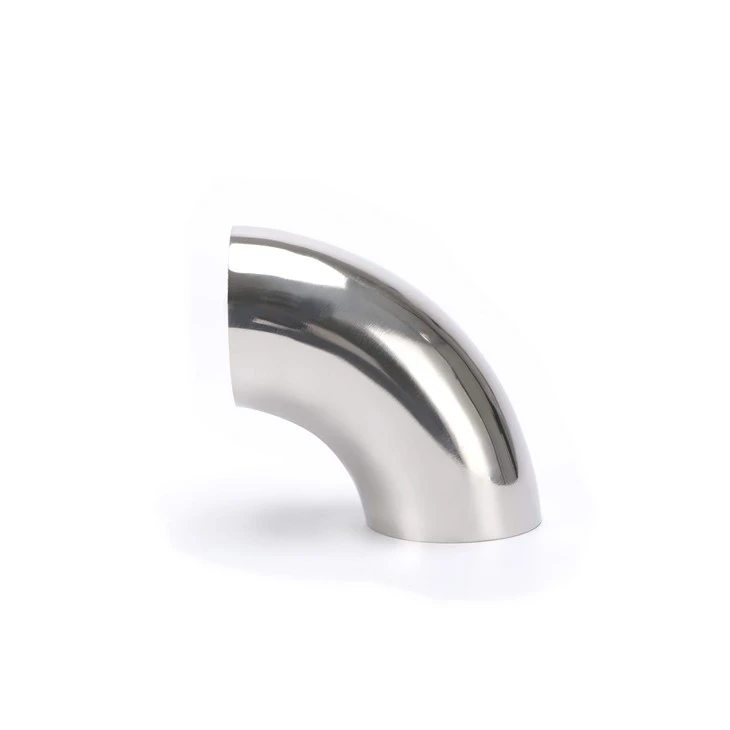
In some cases, where cost is a major concern and the application does not require high performance, cast stainless steel pipe fittings may be used. However, it's important to carefully consider the limitations of cast fittings and ensure they are suitable for the intended application.
Conclusion
In conclusion, there are indeed significant differences in the performance of stainless steel pipe fittings made from different production processes. When choosing the right fitting for your project, it's important to consider factors such as strength, corrosion resistance, dimensional accuracy, and surface finish. You also need to take into account the specific requirements of your application and your budget.
As a supplier of stainless steel pipe fittings, I'm here to help you make the right choice. Whether you need 45° elbow stainless steel pipe fittings, stainless steel pipe compression fittings, or any other type of fitting, I can provide you with high-quality products at competitive prices.
If you're interested in purchasing stainless steel pipe fittings for your project, don't hesitate to get in touch with me. I'd be more than happy to discuss your requirements and provide you with a quote. Let's work together to ensure the success of your project!
References
- ASM Handbook, Volume 6: Welding, Brazing, and Soldering.
- Machinery's Handbook, 31st Edition.
- Stainless Steel Handbook, by Addison-Wesley.
Send Inquiry