

How to improve the processing performance of 310S stainless steel tube?
Jan 07, 2026
Leave a message
As a supplier of 310S stainless steel tubes, I understand the importance of processing performance in meeting the diverse needs of our customers. 310S stainless steel is renowned for its excellent high-temperature resistance, oxidation resistance, and corrosion resistance, making it a popular choice in various industries such as petrochemical, power generation, and heat treatment. However, achieving optimal processing performance can be a challenge due to its unique properties. In this blog post, I will share some practical tips on how to improve the processing performance of 310S stainless steel tubes.
Understanding the Properties of 310S Stainless Steel
Before delving into the methods of improving processing performance, it is essential to understand the properties of 310S stainless steel. 310S is an austenitic stainless steel with a high chromium and nickel content, typically containing 24-26% chromium and 19-22% nickel. This composition gives 310S excellent high-temperature strength and oxidation resistance, allowing it to maintain its mechanical properties at elevated temperatures.
However, the high alloy content also makes 310S more difficult to process compared to other stainless steels. It has a relatively low thermal conductivity, which can lead to uneven heating and cooling during processing, resulting in thermal stress and distortion. Additionally, 310S has a high work-hardening rate, which means it becomes harder and more difficult to deform as it is worked. These properties require careful consideration when processing 310S stainless steel tubes.
Selecting the Right Processing Equipment
The choice of processing equipment plays a crucial role in improving the processing performance of 310S stainless steel tubes. When selecting equipment, it is important to consider the specific requirements of the processing operation, such as cutting, bending, or welding.
For cutting operations, a high-quality cutting machine with sharp blades or a laser cutting system is recommended. Laser cutting offers several advantages over traditional cutting methods, including high precision, minimal heat-affected zone, and the ability to cut complex shapes. It also reduces the risk of thermal stress and distortion, resulting in a cleaner and more accurate cut.
When bending 310S stainless steel tubes, a hydraulic or electric tube bender with adjustable bending radius and angle is essential. The bender should be capable of applying sufficient force to bend the tube without causing cracking or deformation. It is also important to use proper bending dies and mandrels to ensure a smooth and uniform bend.
For welding operations, a suitable welding process and equipment should be selected based on the thickness and type of 310S stainless steel tube. Tungsten inert gas (TIG) welding is a popular choice for welding 310S stainless steel due to its high quality and precision. It produces a clean and strong weld with minimal heat input, reducing the risk of distortion and cracking. Other welding processes, such as metal inert gas (MIG) welding and shielded metal arc welding (SMAW), can also be used, but they may require additional precautions to ensure a high-quality weld.
Optimizing the Processing Parameters
In addition to selecting the right processing equipment, optimizing the processing parameters is also crucial for improving the processing performance of 310S stainless steel tubes. The processing parameters include cutting speed, feed rate, bending radius, welding current, and voltage, among others.
When cutting 310S stainless steel tubes, the cutting speed and feed rate should be adjusted based on the thickness and hardness of the tube. A slower cutting speed and higher feed rate can help reduce the heat generated during cutting, minimizing the risk of thermal stress and distortion. It is also important to use a coolant or lubricant to reduce friction and heat buildup.
When bending 310S stainless steel tubes, the bending radius should be carefully selected to avoid cracking or deformation. A larger bending radius generally results in a smoother and more uniform bend, while a smaller bending radius may require more force and increase the risk of cracking. It is also important to preheat the tube before bending to reduce the work-hardening rate and improve the formability.
When welding 310S stainless steel tubes, the welding current and voltage should be adjusted based on the thickness and type of tube. A higher welding current and voltage can increase the welding speed and penetration, but it may also increase the risk of distortion and cracking. It is important to use a proper welding technique and filler material to ensure a high-quality weld.
Heat Treatment
Heat treatment is an important process for improving the processing performance of 310S stainless steel tubes. Heat treatment can help relieve internal stress, improve the mechanical properties, and enhance the corrosion resistance of the tube.
There are several types of heat treatment processes that can be used for 310S stainless steel tubes, including annealing, quenching, and tempering. Annealing is a process of heating the tube to a specific temperature and then cooling it slowly to relieve internal stress and improve the ductility. Quenching is a process of heating the tube to a high temperature and then cooling it rapidly to increase the hardness and strength. Tempering is a process of heating the quenched tube to a lower temperature and then cooling it slowly to reduce the brittleness and improve the toughness.
The specific heat treatment process and parameters should be selected based on the requirements of the application and the properties of the 310S stainless steel tube. It is important to follow the recommended heat treatment procedures and guidelines to ensure a high-quality and consistent result.
Surface Treatment
Surface treatment is another important process for improving the processing performance of 310S stainless steel tubes. Surface treatment can help improve the corrosion resistance, reduce friction, and enhance the appearance of the tube.

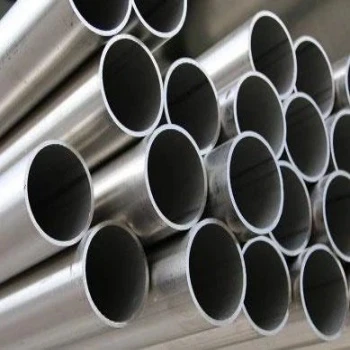
There are several types of surface treatment processes that can be used for 310S stainless steel tubes, including passivation, electropolishing, and coating. Passivation is a process of treating the tube with a chemical solution to remove any free iron or other contaminants from the surface, forming a protective oxide layer. Electropolishing is a process of using an electric current to remove a thin layer of material from the surface, resulting in a smooth and shiny finish. Coating is a process of applying a protective coating to the surface of the tube, such as a paint or a polymer coating, to enhance the corrosion resistance and appearance.
The specific surface treatment process and parameters should be selected based on the requirements of the application and the properties of the 310S stainless steel tube. It is important to follow the recommended surface treatment procedures and guidelines to ensure a high-quality and consistent result.
Conclusion
Improving the processing performance of 310S stainless steel tubes requires a combination of careful selection of processing equipment, optimization of processing parameters, heat treatment, and surface treatment. By understanding the properties of 310S stainless steel and following the recommended processing procedures and guidelines, we can achieve optimal processing performance and meet the diverse needs of our customers.
If you are interested in purchasing high-quality 310S stainless steel tubes or have any questions about processing performance, please feel free to contact us for more information. We are a leading supplier of ASTM A249 Welded Stainless Steel Tube, ASTM A790 UNS S31803 Pipe, and X2CrNi19-11 Stainless Steel Pipe, and we are committed to providing our customers with the best products and services.
References
- ASM Handbook, Volume 13A: Corrosion: Fundamentals, Testing, and Protection.
- Stainless Steel Handbook, 4th Edition.
- Welding Handbook, Volume 1: Welding Science and Technology.
Send Inquiry