

Is 310S stainless steel tube magnetic?
Jul 23, 2025
Leave a message
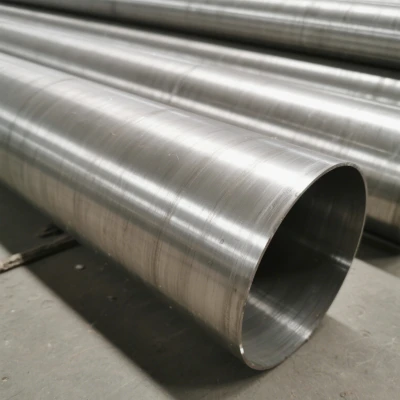
Is 310S stainless steel tube magnetic? This is a question that often comes up among our customers, and as a reliable 310S Stainless Steel Tube supplier, I'm here to provide a comprehensive answer.
Understanding 310S Stainless Steel
310S stainless steel is a high - chromium and high - nickel austenitic stainless steel. It contains approximately 24 - 26% chromium and 19 - 22% nickel. These alloying elements give 310S stainless steel excellent high - temperature resistance, oxidation resistance, and corrosion resistance. It is widely used in various industries such as heat treatment equipment, furnace parts, and chemical processing plants.
The Magnetic Properties of Metals
To understand whether 310S stainless steel tubes are magnetic, we first need to understand the basic principles of magnetism in metals. Magnetism in metals is mainly related to their crystal structure. Ferromagnetic materials, such as iron, nickel, and cobalt, have a specific crystal structure that allows them to be strongly attracted to magnets. They can also be magnetized themselves.
On the other hand, austenitic stainless steels, like 310S, typically have a face - centered cubic (FCC) crystal structure at room temperature. This structure is non - magnetic in its pure form. The high nickel content in 310S stainless steel helps to stabilize the austenitic structure, which is generally non - magnetic.
The Reality of 310S Stainless Steel Tube Magnetism
In theory, 310S stainless steel tubes should be non - magnetic due to their austenitic structure. However, in real - world applications, we may find that some 310S stainless steel tubes show a certain degree of magnetism. There are several reasons for this:
Cold Working
Cold working is a common process in the manufacturing of stainless steel tubes. When 310S stainless steel tubes are cold - worked, such as during drawing or rolling, the austenitic structure can partially transform into a martensitic structure. Martensite is a ferromagnetic phase, so the cold - worked 310S stainless steel tubes may exhibit some magnetism. The degree of magnetism depends on the extent of cold working. The more severe the cold working, the more martensite is formed, and the stronger the magnetism.

Impurities and Inclusions
During the production process, impurities and inclusions may be introduced into the 310S stainless steel. Some of these impurities, such as iron - rich particles, can cause local magnetic effects. Although the overall content of these impurities may be very low, they can still make the tube slightly magnetic.
Heat Treatment
Improper heat treatment can also affect the magnetic properties of 310S stainless steel tubes. If the heat treatment process does not fully restore the austenitic structure or if there are temperature gradients during heat treatment, it may lead to the formation of some ferromagnetic phases, resulting in magnetism.
Testing the Magnetism of 310S Stainless Steel Tubes
As a supplier, we often receive requests from customers to test the magnetism of 310S stainless steel tubes. There are several methods for testing magnetism:
Simple Magnet Test
The simplest way is to use a permanent magnet. If the magnet is attracted to the tube, it indicates that the tube has some magnetism. However, this method is only a rough test and cannot accurately measure the degree of magnetism.
Magnetic Permeability Measurement
Magnetic permeability measurement is a more accurate method. It can measure the magnetic properties of the tube quantitatively. Specialized instruments are used to measure the magnetic permeability of the 310S stainless steel tube, and the results can be used to determine whether the tube meets the required magnetic standards.
Applications and Considerations Related to Magnetism
In most applications, a small amount of magnetism in 310S stainless steel tubes does not affect their performance. For example, in heat treatment equipment, the main requirements for 310S stainless steel tubes are high - temperature resistance and oxidation resistance, and magnetism is not a critical factor.
However, in some applications where magnetism is strictly prohibited, such as in some electronic devices or in environments sensitive to magnetic fields, even a small amount of magnetism in 310S stainless steel tubes can cause problems. In these cases, we need to ensure that the tubes have very low or no magnetism. We can control the manufacturing process, such as reducing cold working and ensuring proper heat treatment, to minimize the magnetism of the tubes.
Our Products and Services as a 310S Stainless Steel Tube Supplier
As a professional 310S Stainless Steel Tube supplier, we offer a wide range of high - quality 310S stainless steel tubes. Our products meet various international standards, such as ASTM A213 Seamless Stainless Steel Tubes and ASTM A270 Sanitary Stainless Steel Tube. We also provide Large Diameter Stainless Steel Welded Pipe Factory Direct Sales for customers who need large - scale products.
We have strict quality control procedures in place to ensure the quality and performance of our 310S stainless steel tubes. Our experienced technicians can also provide customized solutions according to the specific requirements of our customers, including controlling the magnetism of the tubes.
Contact Us for Purchase and Negotiation
If you are interested in our 310S stainless steel tubes or have any questions about their magnetism and other properties, please feel free to contact us. We are always ready to provide you with detailed product information and professional technical support. We look forward to establishing long - term cooperation with you and meeting your needs for high - quality stainless steel tubes.
References
- ASM Handbook Committee. ASM Handbook Volume 1: Properties and Selection: Irons, Steels, and High - Performance Alloys. ASM International, 1990.
- Schaeffler, A. L. "Constitution Diagram for Stainless Steel Weld Metals". Welding Journal, 1949.
Send Inquiry