

How to form stainless steel plate and sheet into complex shapes?
May 16, 2025
Leave a message
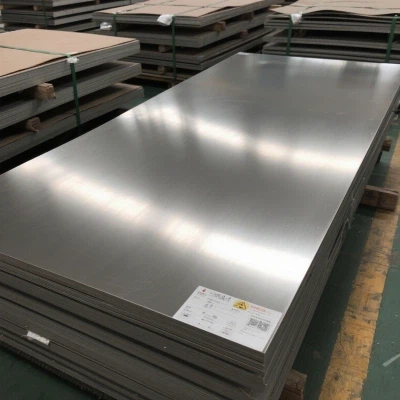
Stainless steel plates and sheets are widely used in various industries due to their excellent corrosion resistance, strength, and aesthetic appeal. However, transforming these flat materials into complex shapes can be a challenging yet rewarding process. As a trusted stainless steel plate and sheet supplier, I've witnessed firsthand the diverse methods and techniques employed to achieve intricate forms. In this blog, I'll delve into the different ways to form stainless steel plates and sheets into complex shapes, offering insights based on industry knowledge and experience.
Understanding Stainless Steel Properties
Before delving into the forming processes, it's crucial to understand the properties of stainless steel. Stainless steel is an alloy primarily composed of iron, chromium, and other elements such as nickel, molybdenum, and titanium. The addition of chromium forms a passive oxide layer on the surface, which provides corrosion resistance. Different grades of stainless steel have varying compositions, resulting in different mechanical properties, such as strength, ductility, and formability.
For instance, 316L Stainless Steel Plate is known for its excellent corrosion resistance, especially in harsh environments containing chlorides. It has good formability and weldability, making it suitable for a wide range of applications, including marine, chemical processing, and food processing industries. On the other hand, 2205 Stainless Steel Plate Supplier offers high strength and corrosion resistance, making it ideal for structural applications in aggressive environments. And UNS S32304 Stainless Steel Plate is a lean duplex stainless steel with a good combination of strength and corrosion resistance at a lower cost.
Common Forming Processes
Bending
Bending is one of the most common methods of forming stainless steel plates and sheets. It involves applying a force to the material to change its shape along a straight axis. There are several bending techniques, including air bending, bottom bending, and coining.
Air bending is the most widely used method, where the material is bent between a punch and a die without fully contacting the bottom of the die. This technique allows for greater flexibility in achieving different bend angles and radii. Bottom bending, on the other hand, involves fully contacting the material with the die, resulting in a more precise bend angle. Coining is a high-pressure bending method that produces sharp, accurate bends with minimal springback.
Roll Forming
Roll forming is a continuous process that involves passing a stainless steel strip through a series of rollers to gradually shape it into a desired profile. This method is suitable for producing long, straight sections with consistent cross-sections, such as channels, angles, and tubes. Roll forming is highly efficient and can produce complex shapes with high precision.
Deep Drawing
Deep drawing is a process used to form stainless steel sheets into three-dimensional shapes, such as cups, cans, and enclosures. It involves placing a flat sheet of stainless steel over a die and using a punch to force the material into the die cavity. The material is stretched and deformed to take on the shape of the die. Deep drawing requires careful control of the process parameters, such as the punch force, die clearance, and lubrication, to prevent cracking and wrinkling of the material.

Hydroforming
Hydroforming is a process that uses high-pressure fluid to form stainless steel plates and sheets into complex shapes. It involves placing the material in a die cavity and applying a fluid pressure to deform the material against the die walls. Hydroforming offers several advantages, including the ability to form complex shapes with minimal tooling, reduced springback, and improved surface finish.
Spinning
Spinning is a process used to form circular or cylindrical shapes from stainless steel plates and sheets. It involves rotating the material on a lathe while a tool is used to shape it into the desired form. Spinning is commonly used to produce components such as bowls, pans, and decorative items.
Factors Affecting Formability
Several factors can affect the formability of stainless steel plates and sheets, including the material grade, thickness, grain structure, and surface condition.
- Material Grade: Different grades of stainless steel have different formability characteristics. Austenitic stainless steels, such as 304 and 316, are generally more formable than ferritic or martensitic stainless steels due to their higher ductility.
- Thickness: Thicker materials are generally more difficult to form than thinner materials. As the thickness increases, the material becomes stiffer and requires more force to deform.
- Grain Structure: The grain structure of the stainless steel can also affect its formability. Fine-grained materials are generally more formable than coarse-grained materials due to their higher ductility.
- Surface Condition: The surface condition of the stainless steel can also affect its formability. A smooth, clean surface is generally more formable than a rough or dirty surface.
Tips for Successful Forming
To ensure successful forming of stainless steel plates and sheets, it's important to follow these tips:
- Select the Right Material: Choose the appropriate grade of stainless steel based on the specific application and forming requirements. Consider factors such as corrosion resistance, strength, and formability.
- Prepare the Material: Before forming, ensure that the material is clean and free of any contaminants. This can help prevent surface defects and improve the formability of the material.
- Use the Right Tools and Equipment: Select the appropriate tools and equipment for the forming process. Ensure that the tools are in good condition and properly maintained to prevent damage to the material.
- Control the Process Parameters: Carefully control the process parameters, such as the force, speed, and temperature, to ensure consistent and accurate forming. This can help prevent cracking, wrinkling, and other defects in the material.
- Perform Quality Checks: After forming, perform quality checks to ensure that the formed parts meet the required specifications. This can include visual inspection, dimensional measurement, and non-destructive testing.
Conclusion
Forming stainless steel plates and sheets into complex shapes requires a combination of knowledge, skill, and experience. By understanding the properties of stainless steel, selecting the appropriate forming process, and following the tips for successful forming, you can achieve high-quality, precision-formed parts. As a stainless steel plate and sheet supplier, I'm committed to providing our customers with the highest quality materials and technical support to help them achieve their forming goals.
If you're interested in learning more about our stainless steel products or have any questions about forming stainless steel plates and sheets, please don't hesitate to contact us. We'd be happy to discuss your specific requirements and provide you with a customized solution.
References
- ASM Handbook, Volume 6: Welding, Brazing, and Soldering
- The Welding Institute (TWI) - Stainless Steel Welding Guide
- Stainless Steel World Magazine - Forming and Fabrication of Stainless Steel
Send Inquiry